
Songkhla might not top your Thailand travel list just yet—but that’s exactly why it should. Recently recognised by UNESCO as a Creative City of Gastronomy (2025), this laid-back coastal province is earning global attention for its vibrant food culture, artistic heritage, and community-driven creativity.
Tucked between Songkhla Lake and the Gulf of Thailand, the city rewards slow travellers with heritage-rich streets, art-filled alleyways, and some of the cleanest beaches in the country. For those drawn to local flavour and timeless charm, Songkhla’s Old Town is pure magic.
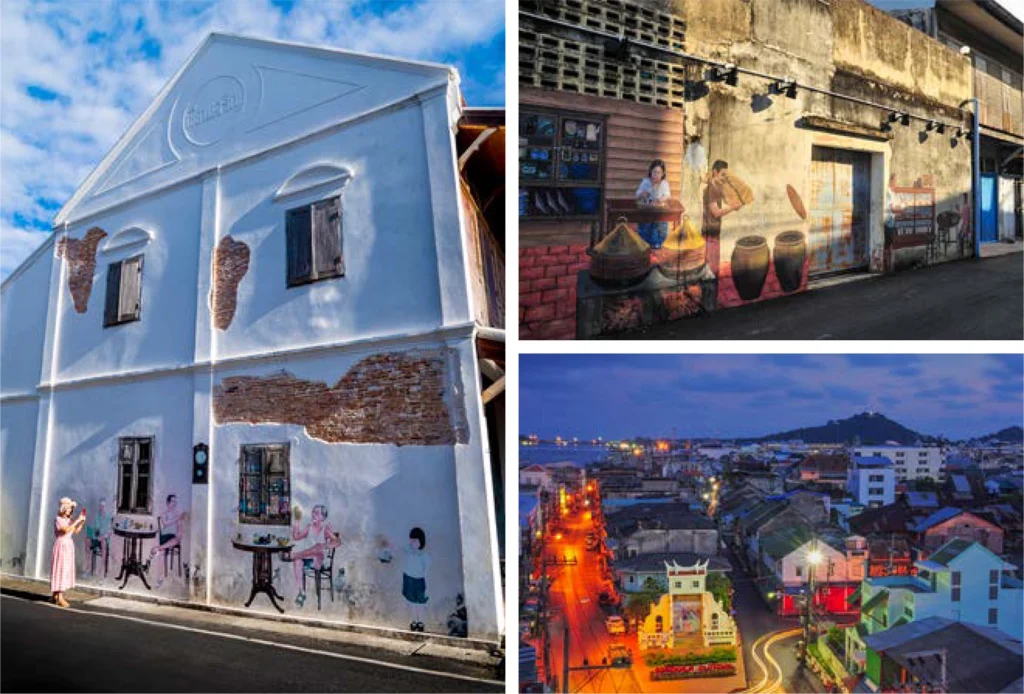
For more than two centuries, Songkhla has been a thriving maritime hub linking Thailand with China, the Malay Peninsula, and beyond. That long history of trade has left an indelible mark—one that’s best uncovered on foot. Wander along Nakhon Nok, Nakhon Nai and Nang Ngam Roads, where Hokkien-style shophouses with colourful shutters and stuccoed façades now host indie cafés, boutique stays, and hidden museums.
Start at the Songkhla City Gate, then stroll towards the waterfront. The fading façades whisper stories of the days when merchants sailed between Penang, Singapore, and Songkhla, carrying spices, textiles, and tales.
The town’s multicultural roots are woven into daily life. Malay-speaking Muslims, Thai Buddhists, and Chinese migrants have lived side by side for generations, their traditions blending effortlessly into one another.
A Taste of Songkhla
Food is where this melting pot truly comes alive—and where UNESCO’s latest nod feels most deserved. Begin your day local-style with a dim sum breakfast—steaming baskets of har gao (shrimp dumplings), siu mai (pork dumplings), and comforting bowls of khao tom (rice porridge) topped with braised pork or shredded chicken. Pair it with a cup of dark kopi coffee or soy milk and pa tong go (Chinese dough sticks), and you’ll understand why mornings here are unhurried.
Craving something sweet? Pop into Baan Chong Dee Khanom Thai on Nang Ngam Road. The family-run shop crafts delicate royal desserts like thong ek (golden egg-yolk dumplings) and sam pan nee (coconut cookies), made the traditional way.
Art breathes new life into Songkhla’s Old Town. Murals splash across alleyways, depicting Chinese opera performers, coffee vendors, and scenes from local folklore. Don’t miss the Red Rice Mill, a heritage warehouse reborn as a cultural space. Its towering chimney and old rice-processing machinery now set the stage for storytelling sessions, craft workshops, and rotating art exhibitions.

Nearby, Baan Nakhon Nai offers a glimpse into the city’s trading past. This restored Sino-European house museum brims with antique furniture, carved wooden beds, and relics from Songkhla’s merchant era. For a broader sweep of history, head to the Songkhla National Museum, where centuries of artifacts—from ceramics to manuscripts—trace the town’s maritime legacy.
By the Water
No trip to Songkhla is complete without a sunset stroll along Samila Beach. With its casuarina-lined sands and golden light, this is one of Thailand’s cleanest stretches of coast. Seek out the Golden Mermaid Statue, said to bring luck to those who visit, and gaze out at the twin islets of Koh Nu and Koh Maew just offshore.
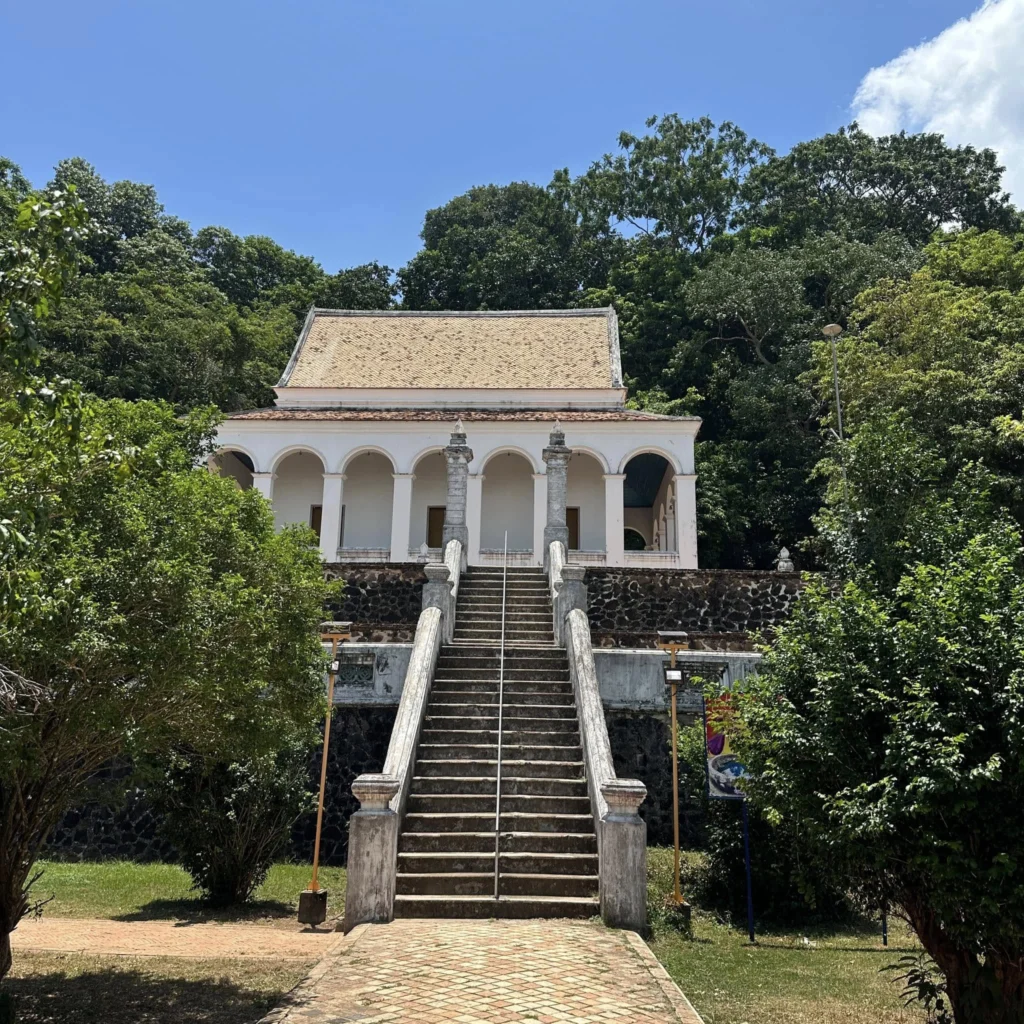
For a quieter escape, make your way to Laem Son or climb up to Wat Suwan Khiri, perched on Khao Daeng Hill. Built in the 18th century, this temple blends Thai, Chinese, and European styles, with ceramic-gabled roofs and gothic flourishes. Another must-see is Wat Bo Sap, home to striking murals that fuse Buddhist tales with local legends.
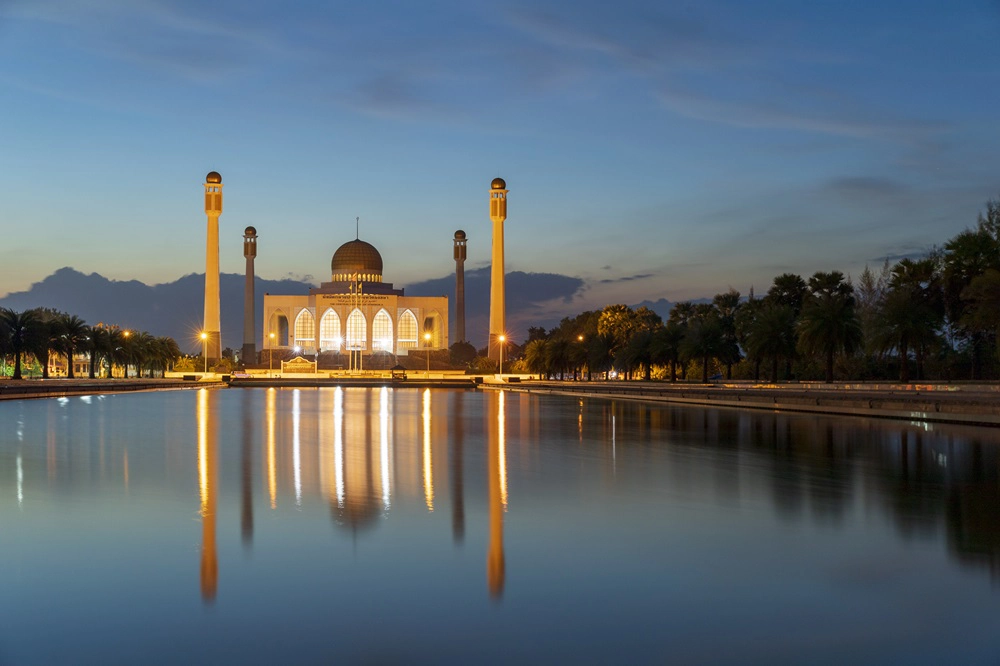
About 25 minutes south of the Old Town stands the Songkhla Central Mosque, one of southern Thailand’s most beautiful landmarks. Surrounded by reflective pools and palm trees, the mosque’s gleaming white dome and grand symmetry make it a serene spot for contemplation. Though primarily a place of worship, it welcomes visitors eager to learn about the region’s Islamic heritage.
With its new UNESCO Creative City status, Songkhla is officially on the map—but it still feels blissfully undiscovered. Between its heritage streets, creative cafés, and quiet coastline, this seaside town is the kind of place that rewards curiosity and unhurried travel. Trace its multicultural roots, savour dim sum at dawn, and watch the sunset turn the sands of Samila gold.
You may arrive for a weekend—but you’ll want to linger longer.

NATURE
A Tranquil Retreat by Songkhla Lake
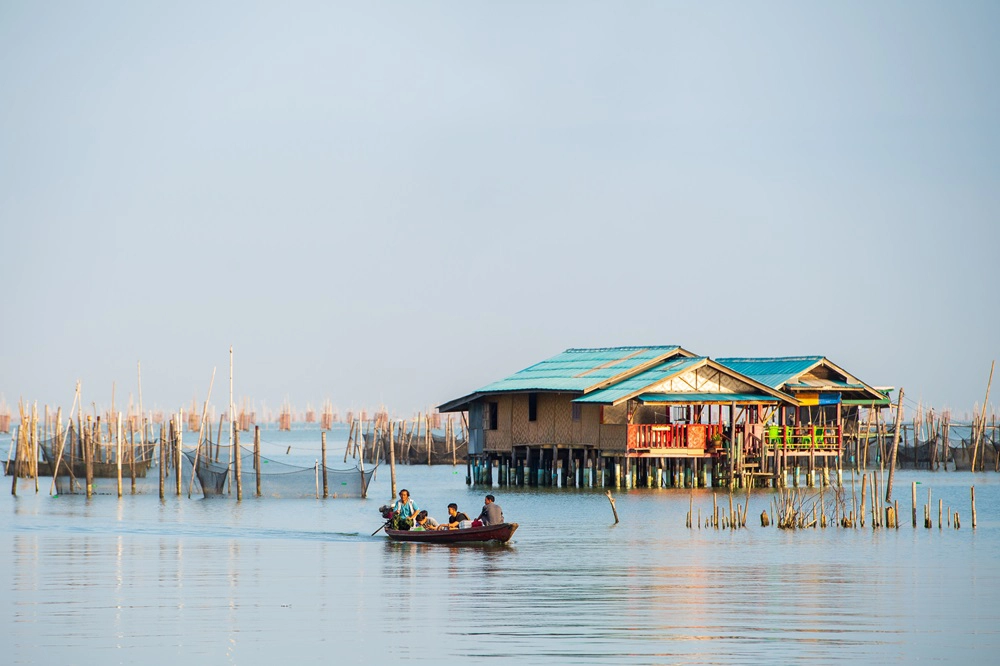
Tucked along the tranquil shores of Songkhla Lake in southern Thailand, Pak Pra Village in Phatthalung reveals a timeless rhythm of life. Famous for its towering yor (giant lift nets) that rise gracefully from the water at dawn, this lakeside haven invites travellers into a world where age-old fishing traditions meet the quiet beauty of nature.
>> Read more
If You Go
Getting there:
Fly into Hat Yai International Airport (HDY)—the closest major airport—then continue by bus or taxi (about 45 minutes) to Songkhla. Long-distance buses also run from Bangkok (12–14 hours), or you can catch a train from Krung Thep Aphiwat Central Terminal to Hat Yai (14–17 hours), followed by a short transfer.
Getting around:
Songkhla is compact and best explored on foot or by tuk-tuk. For more freedom, rent a scooter and cruise between beaches, temples, and lakeside villages at your own pace.