

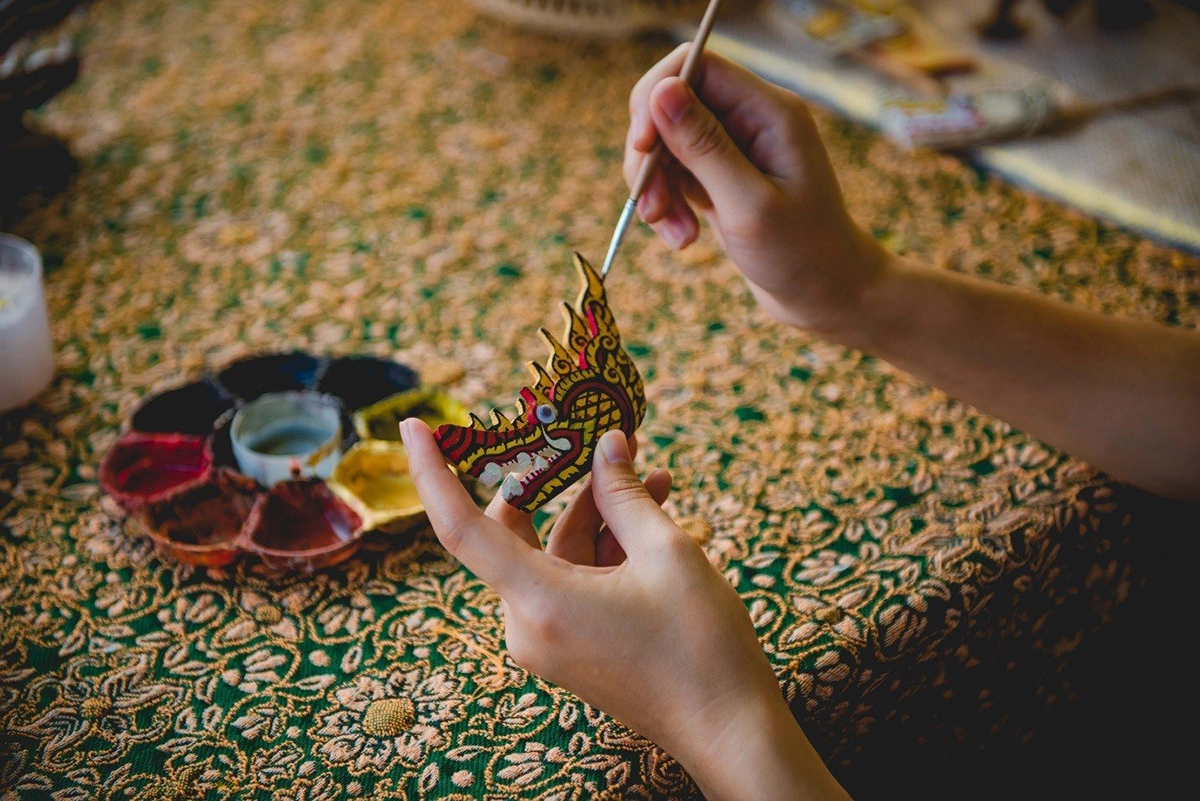
Tucked between misty mountains along the Lao border, Nan feels wonderfully remote—a quiet northern province where temples glow with centuries-old murals and village looms still click beneath stilted homes. Now recognised by UNESCO as Thailand’s newest Creative City of Crafts and Folk Art, Nan is finally getting the global spotlight its artisans have long deserved.
But creativity is nothing new here. Nan’s identity has always been shaped by movement—of people, rivers, and ideas. Once an independent kingdom squeezed between Chiang Mai, Sukhothai and Luang Prabang, the province grew into a cultural crossroads. Today, its communities—from Thai Yuan and Tai Lue to Hmong, Iu Mien, Khmu, Lua and Mlabri—continue to shape Nan’s aesthetic through textiles, woodwork, ceramics and rituals that flow naturally from the landscape.
Temples with Stories to Tell
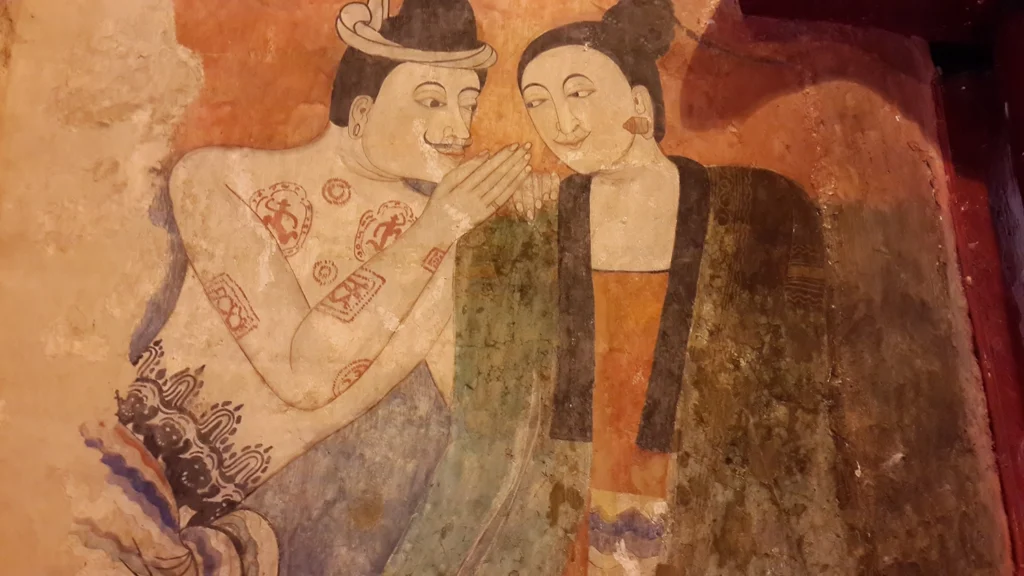
Start at Wat Phumin, Nan’s most celebrated landmark. Inside, the famous mural known as The Whispering of Love captures a tender moment between a couple, painted with such warmth that visitors often linger longer than intended. Just across the courtyard, the elephant-flanked stupa of Wat Phra That Chang Kham shows off Sukhothai lines, while the carved timber viharn at Wat Baan Ton Lang in Pua glows with Tai Lue craftsmanship. Together, these temples feel like an open-air library of northern styles—Lanna woodwork, Burmese detailing, and Chinese motifs woven into one elegant whole.
For a deeper look at Nan’s spiritual artistry, the Nan National Museum—formerly the residence of the province’s final ruler—houses one of Thailand’s finest collections of wooden Buddha sculptures.
Creativity in Nan often shows up in small gestures: villagers snipping filigree mulberry paper, folding flower cones for offerings, or hanging colourful tung banners that sway like vertical prayers. During the Mahachat sermon, delicate floral mobiles called Dok Mai Pan Duang fill temple halls, honouring the Dharma with a thousand suspended blossoms. It’s these fleeting rituals that reveal how closely art, belief and nature intertwine here.
When the River Becomes a Canvas
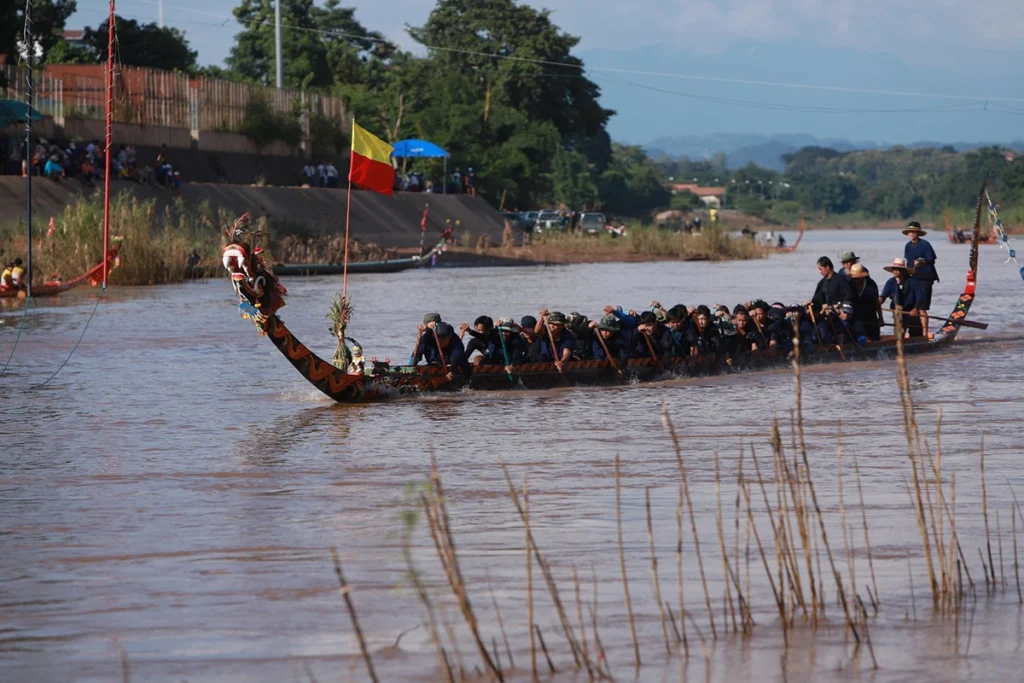
During the rainy season, the swollen Nan River turns into a floating procession of colour as longboat races take over. The prows—carved into nagas, crocodiles or mythic lion-serpents—serve as community emblems as much as racing vessels. Many local designers now draw inspiration from these flowing forms, reimagining boat motifs in jewellery, home décor and contemporary craft.
Nan’s textiles are among its most cherished expressions of identity. In Pua and Tha Wang Pha, Tai Lue women weave cotton with understated elegance, while Hmong and Iu Mien communities produce bold batik, vivid embroidery and silverwork that translates ancestral patterns into wearable storytelling. New creative studios like Phaeo Phafai and Do Silver & More are giving these traditions fresh life through modern clothing and jewellery, proving that heritage can evolve without losing its soul.
Clay, Silver and the Echo of Old Kilns

In Bo Suak, the remnants of ancient ceramic kilns hint at Nan’s long-distance trade past. At the Bo Suak Pottery Learning Center, travellers can try their hand at shaping local clay, guided by artisans who are reviving designs once shipped across the Lanna world. Silverwork is equally storied here—long valued as both currency and adornment, hammered by generations of Hmong and Iu Mien silversmiths whose repoussé designs shimmer like stitched metal.
What makes Nan magnetic is its balance of reverence and reinvention. Art isn’t confined to museums—it’s stitched into shawls, carved into boat prows, painted on temple walls, and folded into rituals that guide everyday life. As dusk settles over the valley and temple bells echo across the river, Nan feels less like a quiet corner of the north and more like a living gallery where creativity never stops flowing.

THAILAND VISIT
Soothing tired eyes with a hundred shades of green
Located between downtown Nan and the Thai–Lao border, Pua is a bucolic green valley dotted with local villages, small Buddhist temples, and majestic mountain ranges. This small town in a tranquil valley attracts visitors looking for a permaculture retreat, a family-run café, and a farm stay.
>> Read more
With its new UNESCO title, Nan isn’t stepping into the future as a relic—but as a model of how tradition, community and landscape can shape sustainable, meaningful craft for generations.
Where to See Nan’s Creativity
Nan National Museum – Wooden Buddha sculptures, royal heritage and local craftsmanship.
Wat Phumin – Home to the iconic Whispering of Love mural.
Bo Suak Pottery Learning Center – Revived ancient kilns; try hands-on clay workshops.
The Noble House (Hong Chao Fong Kham) – Traditional weaving, local crafts and classic northern cuisine.
Nan Museum (Art Museum) – A curated look at regional art, culture and distinct handicrafts.






[…] >> Read more […]
Comments are closed.