
Once the city’s main railway gateway, Hua Lamphong Station now exists in a different register of Bangkok lifeless as a transport hub than as a cultural anchor. With long-distance services shifting to Krung Thep Aphiwat Central Terminal, the historic station has not so much faded as recalibrated. Around it, the surrounding quarter has begun to feel newly legible: a dense, walkable district where temples, canals, cafés and contemporary art sit within an easy stride of one another.
This is a Bangkok best encountered on foot. Over the course of a day, the neighbourhood reveals itself in layers—quietly devotional in the morning, textural and urban by afternoon, and increasingly animated as night falls.
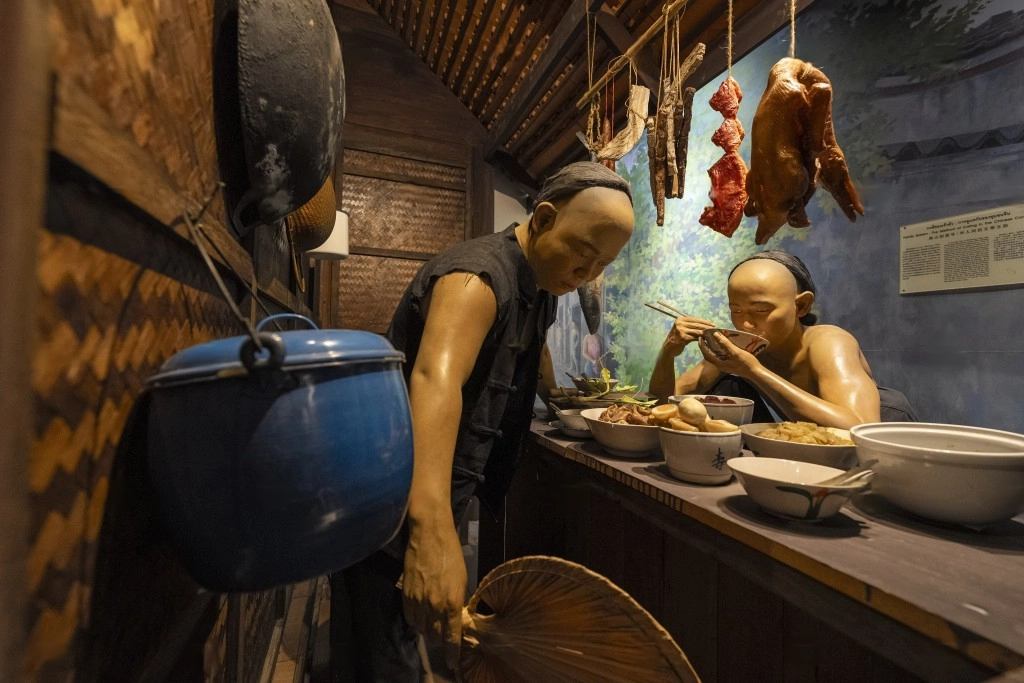
A fitting place to begin is just a short walk from the station at Wat Traimit, formally Wat Traimit Withayaram Worawihan. The temple is home to the famed Golden Buddha, a 5.5-tonne solid gold statue whose discovery—accidentally revealed beneath plaster in the 1950s—has become part of Bangkok’s modern folklore. Inside the ordination hall, the figure sits with a subdued luminosity that feels almost restrained rather than ostentatious. The adjoining museum situates the statue within a broader narrative of Chinese-Thai migration and trade, grounding the site in the lived histories of the surrounding quarter. Early mornings are best, when the heat is still tempered and the temple grounds feel quietly suspended.
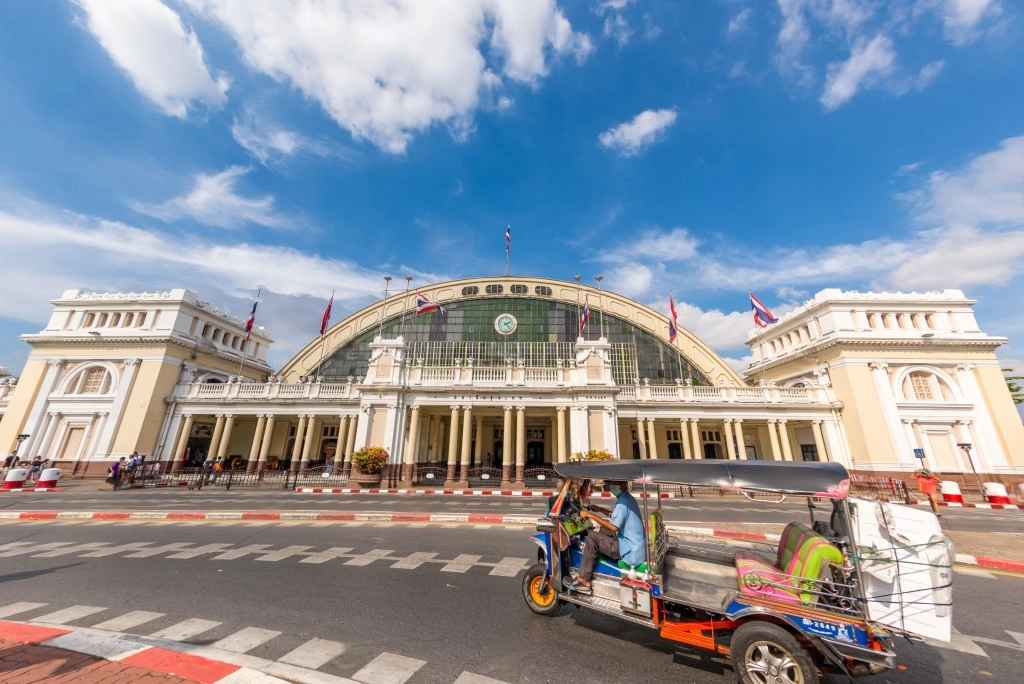
From there, the walk leads back towards the station itself, where Hua Lamphong Station continues to hold its architectural authority. Opened in 1916 and designed by Italian architect Mario Tamagno, the building is a study in Beaux-Arts formality—its vaulted roof, stained glass panels and polished marble floor recalling a different era of rail travel. Even in partial retirement, it remains active in a different sense: travellers resting between connections, photographers tracking light across the concourse, commuters passing through with habitual ease.
Just behind the main hall, the small Thailand Railway Museum offers a compressed history of the country’s rail infrastructure—sepia-toned photographs, vintage timetables, and models that map out a slower geography of movement. The effect is less didactic than atmospheric, a reminder that infrastructure can also function as memory.
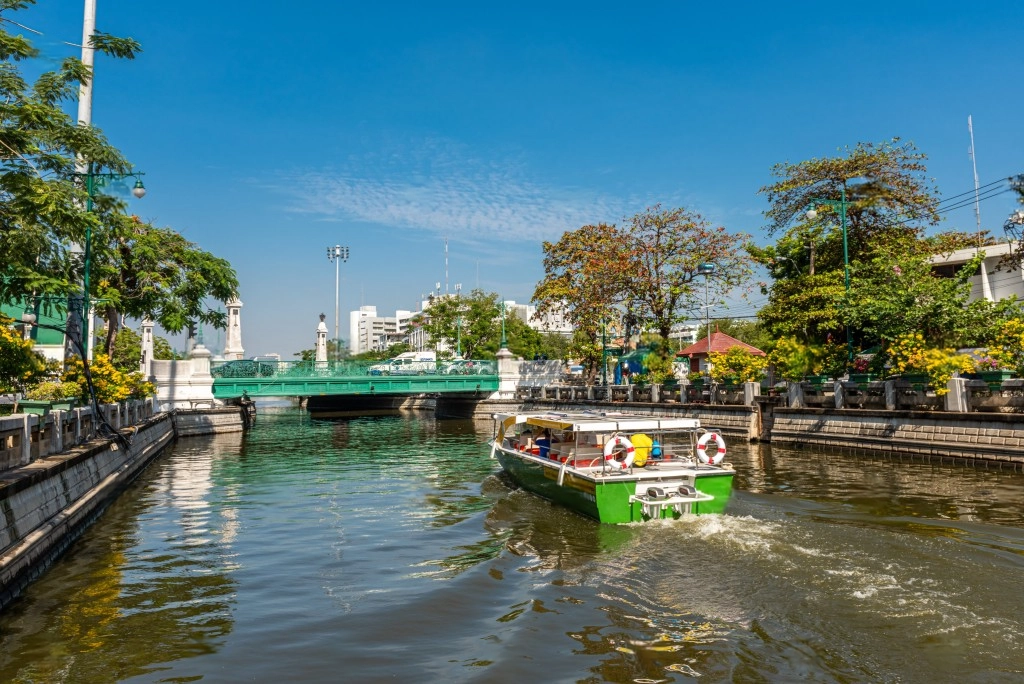
From here, the city loosens. A short walk brings the route to the Krung Kasem Canal, where the Krung Kasem Canal Walk traces a gentler corridor through the urban fabric. Once part of a defensive moat system commissioned in the 19th century, the canal now runs as an unhurried pedestrian route. The water moves sluggishly between weathered bridges and low-rise shopfronts; occasional bursts of activity—street barbers, cyclists, a vendor arranging fruit—interrupt the stillness. It is one of Bangkok’s quieter public spaces, where the city’s pace recalibrates almost imperceptibly.
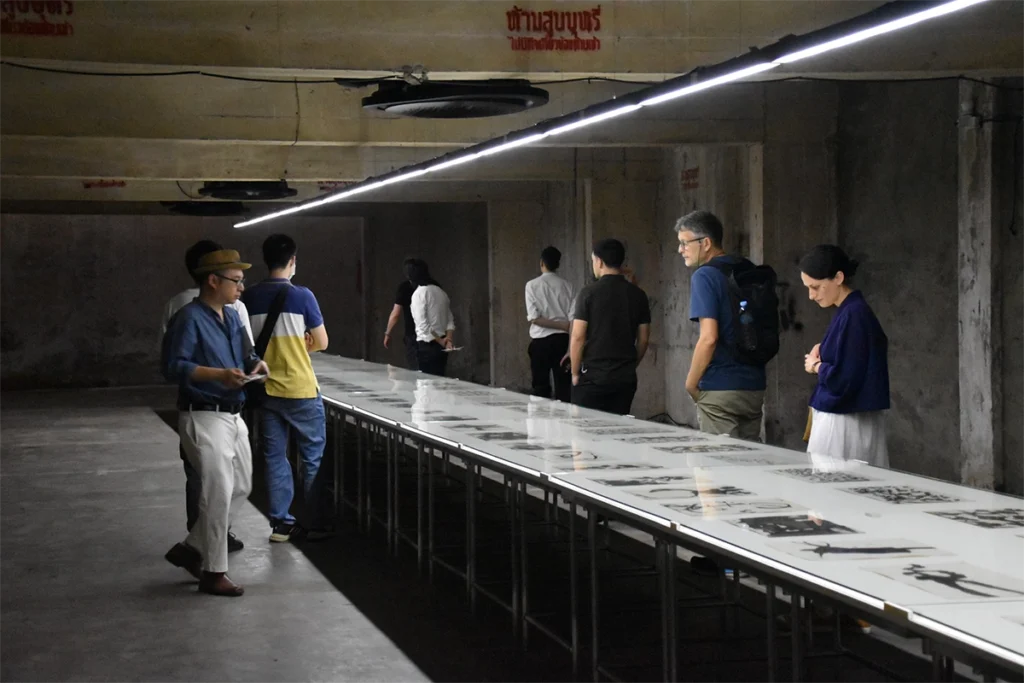
A more abrupt shift in register arrives just beyond the western edge of the station at Bangkok Kunsthalle, a vast contemporary art space housed in a repurposed brutalist printing factory near Nana Alley. Opened in 2024, it has quickly become one of the city’s most ambitious cultural venues. Inside, the scale is industrial—raw concrete, high ceilings, an absence of decorative softness that allows installations to dominate the space entirely. Exhibitions rotate between experimental media, performance and immersive work, often favouring ambiguity over resolution. Admission is free, and the experience feels less like visiting a gallery than entering a temporary condition of the city itself.
By mid-afternoon, the neighbourhood’s café culture begins to assert itself, particularly around Soi Nana in Chinatown, where adaptive reuse has become an informal architectural language.
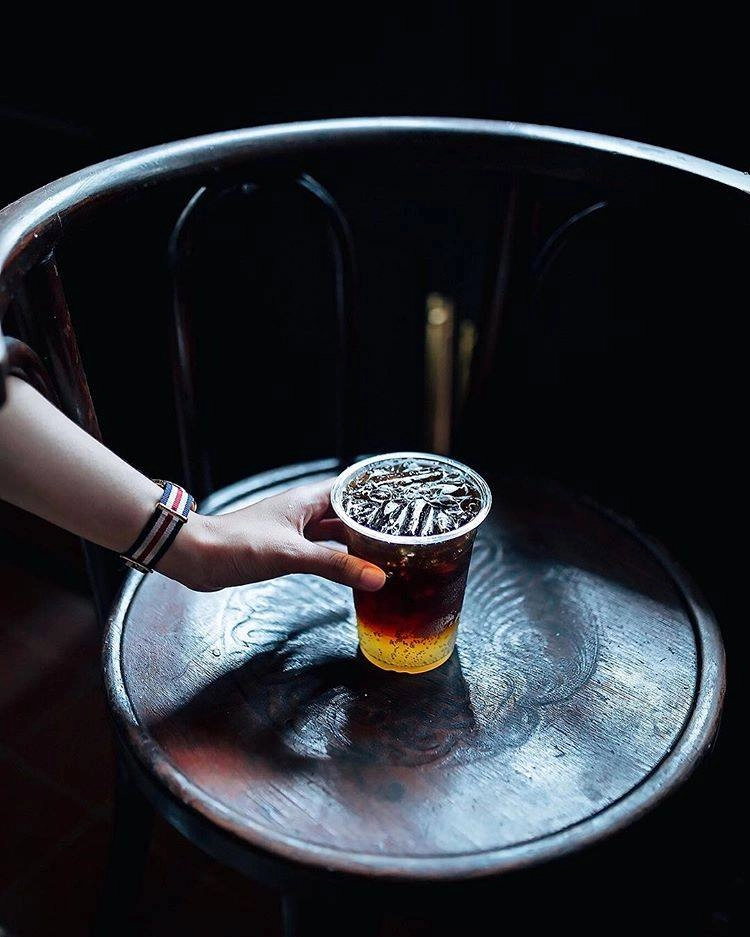
At 103 Bed and Brews, Thai-Chinese heritage is refracted through a contemporary café-hostel hybrid, where cold brew is served beneath high ceilings and muted design nods to the area’s migrant histories. A short walk away, Akirart Coffee channels a different nostalgia—this time for 1980s Thai office aesthetics, rendered through pastel furniture, retro signage and carefully curated kitsch.
Further along, Arai Arai Café and Bar functions less as a café than a social infrastructure: part gallery, part retail space, part informal gathering point where creative communities drift in and out across the day. In contrast, Wallflowers Café leans into theatricality, its multi-storey interior filled with dried florals and subdued light, culminating in a rooftop view over the surrounding rooftops of Hua Lamphong.
For a quieter pause, Maithe Café offers a slightly creaking ascent above Maitri Chit Road, rewarding the climb with an elevated view of the district’s colonial-era streetscape and everyday movement below.
As daylight drains, Hua Lamphong shifts again—this time into a more concentrated nightlife geography, largely centred around Soi Nana and its adjacent lanes.
At Ba Hao, Chinese-inspired interiors and low lighting set the tone for cocktails that draw on both nostalgia and experimentation. Nearby, Teens of Thailand retains its reputation as one of the city’s earliest gin-focused bars, hidden behind a modest façade that opens into a densely atmospheric interior of botanicals and backlit bottles.
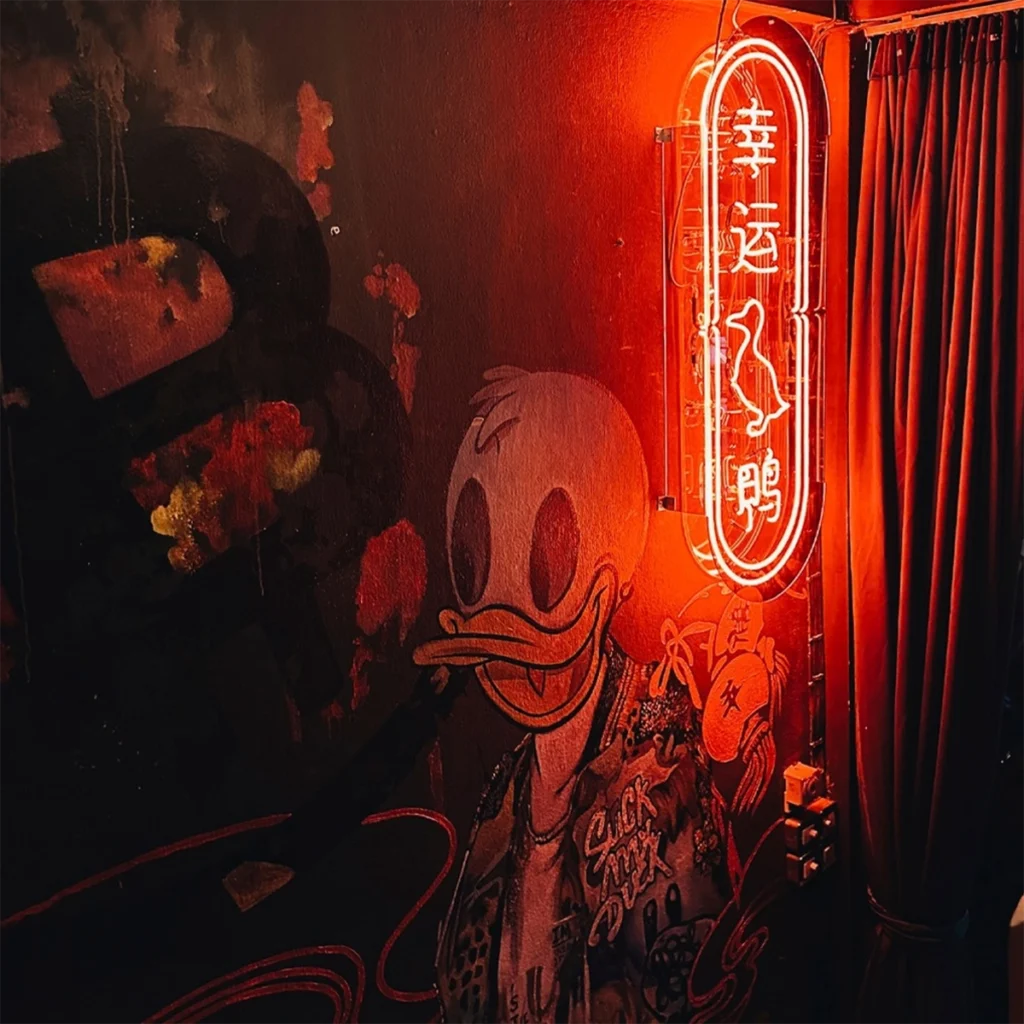
At TEP BAR, Thai heritage becomes the framework for mixology—herbs, traditional music and flavour profiles that reference older culinary vocabularies without becoming literal. And above the Italian restaurant Contento, Lucky Duck Bar channels a more cinematic sensibility: part Shanghai speakeasy, part Hong Kong film set, accessed via a deliberately incongruous entrance that reinforces the sense of concealment.
The final stop belongs to a different register entirely. At Khao Tom Paeng Nam (Nana Branch), the city compresses into a late-night bowl of rice porridge. Plates of crispy pork, salted fish and spicy prawns arrive without ceremony. Conversations soften. The district, so full of curated experiences by day, returns to something elemental.
Hua Lamphong’s surroundings are not defined by spectacle, but by proximity—how easily one mood gives way to another within a few hundred metres. In that sense, the neighbourhood reflects a broader Bangkok condition: adaptive, layered, and always in quiet negotiation with its own past.