
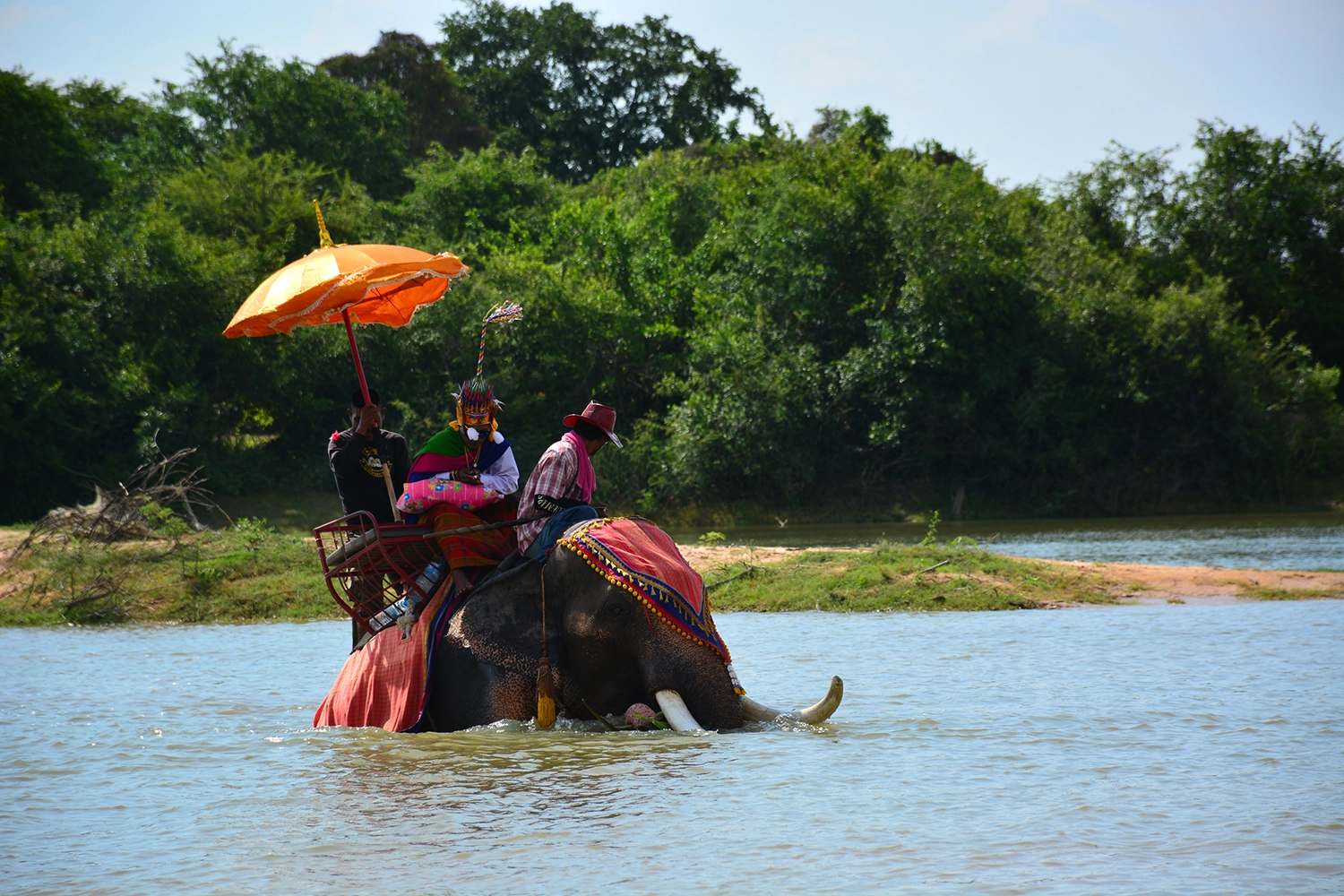
In Thailand’s northeast, a village known for its centuries-old relationship with elephants is preparing for one of the country’s most distinctive religious ceremonies, where men enter monkhood not on foot, but on elephant back.
The three-day Elephant Ordination festival, locally called Buad Nak Chang, will take place from April 29 to May 1 in Ban Ta Klang, a Kui community in Surin province about 40 kilometres from the provincial capital. The event combines Buddhist practice with local spiritual beliefs and the Kui people’s long-standing role as mahouts.
Ordination is a common rite of passage in Thailand, where many men spend a period as monks to make merit and honour their families. In Ban Ta Klang, however, the ceremony is shaped by the presence of elephants, animals that are deeply embedded in daily life and cultural identity.
Preparations begin at the village temple, Wat Chaeng Sawang, where ordinands gather for initial rites. Heads are shaved in a symbolic break from lay life, followed by the khwan nak ritual — a series of chants and recitations intended to recall the spirit and remind participants of their obligations to their parents and to Buddhist teachings.
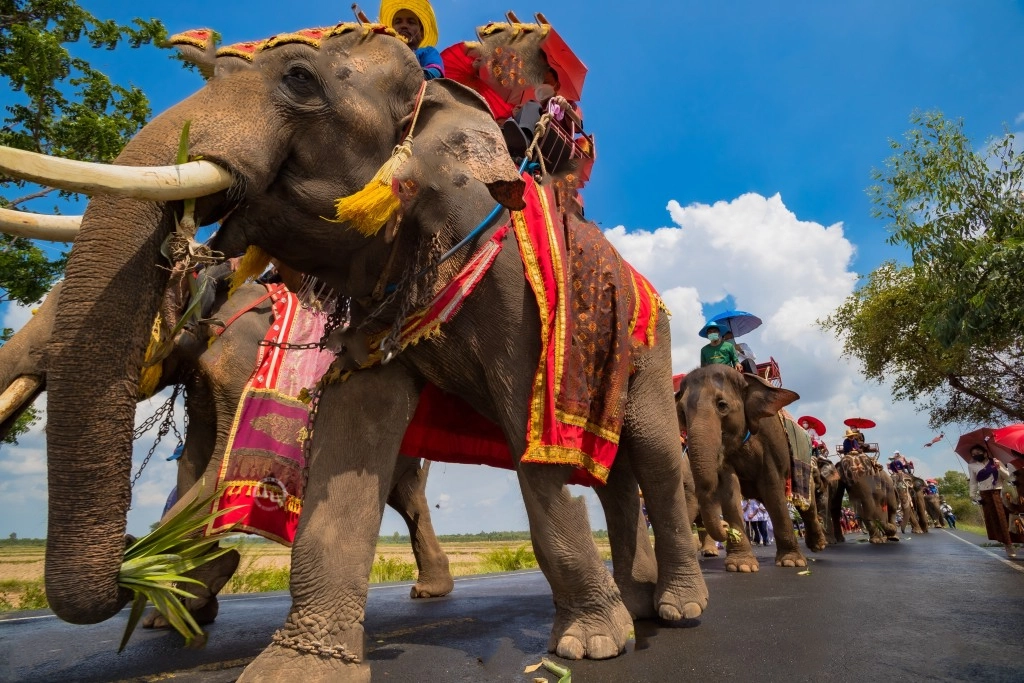
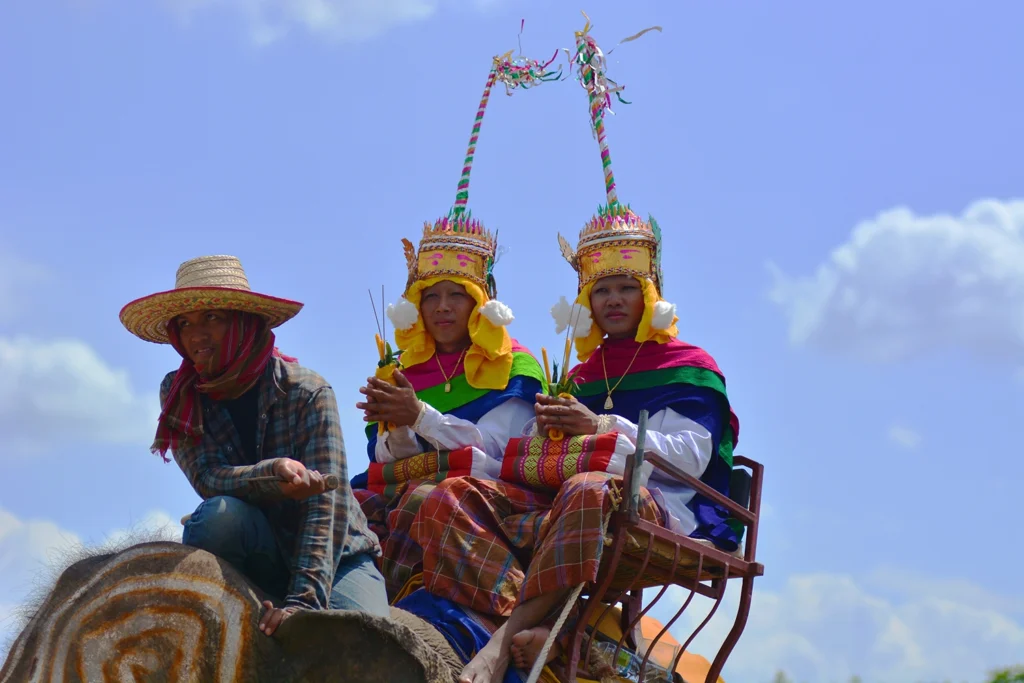
The festival’s most visible moment comes on April 30, when a procession of decorated elephants carries the ordinands through the village and surrounding rice fields. The animals are painted with traditional patterns and draped in colourful cloth, while the men wear ornate ceremonial dress.
The procession moves slowly from the temple toward Wang Thalu, a site where the Mun and Chi rivers meet. Along the route, villagers gather to watch, pray and greet participants, while musicians and dancers accompany the procession in a loosely organised parade.
At the river confluence, a ritual is performed to honour ancestral spirits believed to reside in the area. Community members say the ceremony seeks blessings and forgiveness for both the ordinands and the elephants before the formal ordination takes place.
On May 1, the event concludes back at the temple with the ordination ceremony itself. In contrast to the previous day’s procession, the final rites are subdued and formal. The ordinands change into simple robes and take monastic vows in a traditional Buddhist ceremony.

ARTS & CULTURE
A Timeless Journey through Phimai National Museum
Recently revamped, Phimai National Museum reopens as a sleek cultural showcase, pairing the depth of Phimai’s ancient past with contemporary, immersive exhibition design.
>> Read more
Ban Ta Klang is home to the Kui people, an ethnic group historically known for their expertise in training and living alongside elephants. Locals describe the relationship as one of familiarity and mutual understanding, developed over generations.
While elephant-related festivals in Thailand often draw attention for their scale and spectacle, Buad Nak Chang is distinguished by its integration into a religious rite. For the community, it remains both a spiritual obligation and a cultural gathering, bringing together returning residents, families and visitors during a brief seasonal pause before the annual monsoon.
Planning your visit
Ban Ta Klang isn’t a polished festival destination, and that’s part of its appeal. Facilities are basic, and English is limited, but the experience is authentic and largely unfiltered. Arrive early on procession day to find a good vantage point, and dress modestly—this is, first and foremost, a religious event.
Surin is reachable by train from Bangkok’s Krung Thep Aphiwat Central Terminal (6–8 hours) or by bus from Mo Chit Bus Terminal (6–7 hours). Alternatively, fly to Buriram and continue overland – a drive of an hour.
For travellers interested in culture beyond the usual circuit, Buad Nak Chang offers a rare window into a community where ritual, livelihood and the human–elephant relationship remain closely intertwined.