

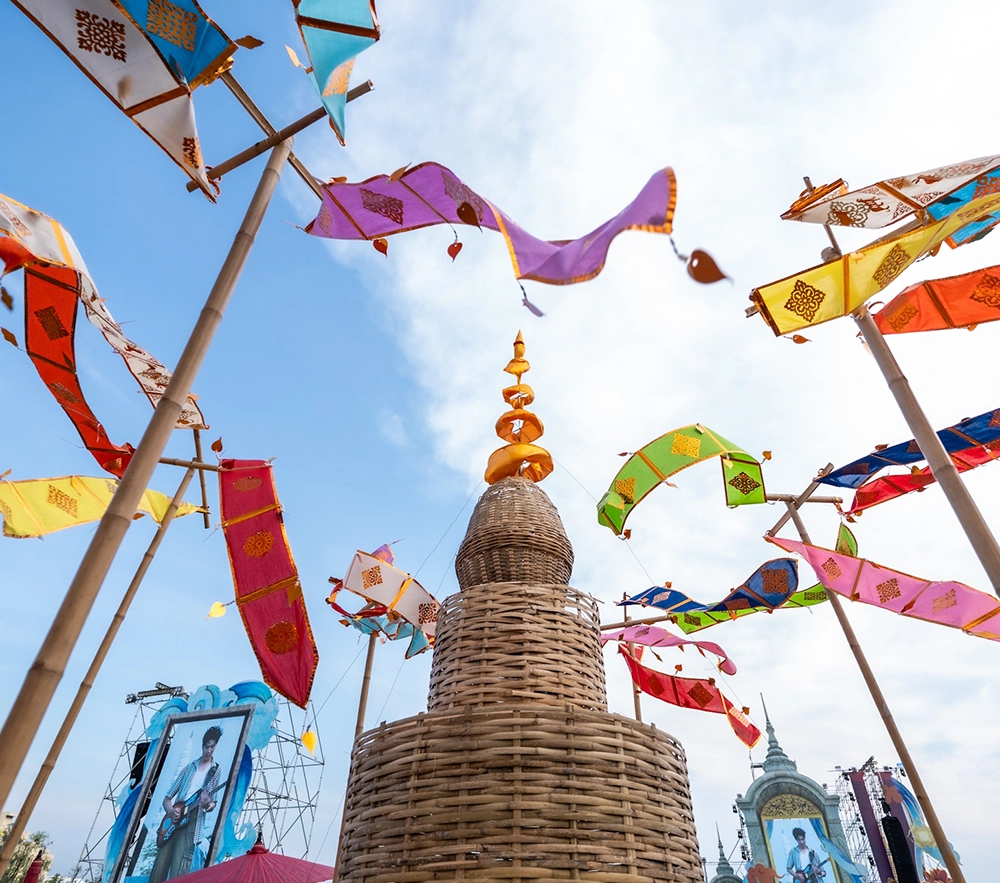
For years, Songkran in Bangkok unfolded along a predictable axis. The chaos of Khao San Road—where water guns, buckets and crowds turned the street into a days-long party—was balanced by quieter rituals at Sanam Luang. It was exuberant and devotional at once, a festival that managed to hold both spectacle and tradition in tension.
This year, the city is trying something different.
Much of Bangkok’s official Songkran programming has shifted to Benjakitti Park and Lumpini Park, two large, connected green spaces in the city’s commercial core. The move trades dense streets for open lawns and controlled venues—an adjustment that is as practical as it is symbolic.
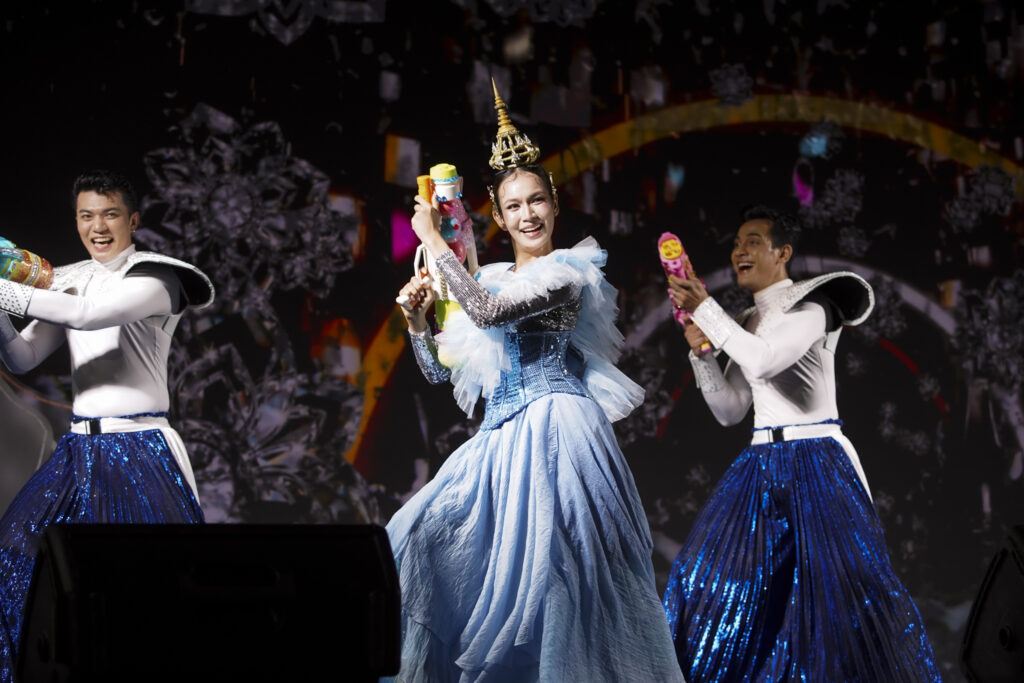
At Benjakitti Park, the Maha Songkran World Water Festival (April 11–15) unfolds across broad promenades with the skyline as backdrop. The setting immediately changes the texture of the celebration: there is space to move, to observe, to step away. The opening procession, introducing the Songkran goddess Nang Raksadevi, leans into pageantry, blending traditional iconography with a polished, almost theatrical presentation.
As the festival progresses, the park fills with overlapping rhythms. Live music draws evening crowds, while large-scale drone shows illuminate the sky in carefully choreographed patterns. In designated areas, water play continues—less frenetic than on the city’s streets, but still central to the experience. Nearby, electronic music stages pull in younger audiences, giving parts of the festival the feel of a contemporary outdoor concert.
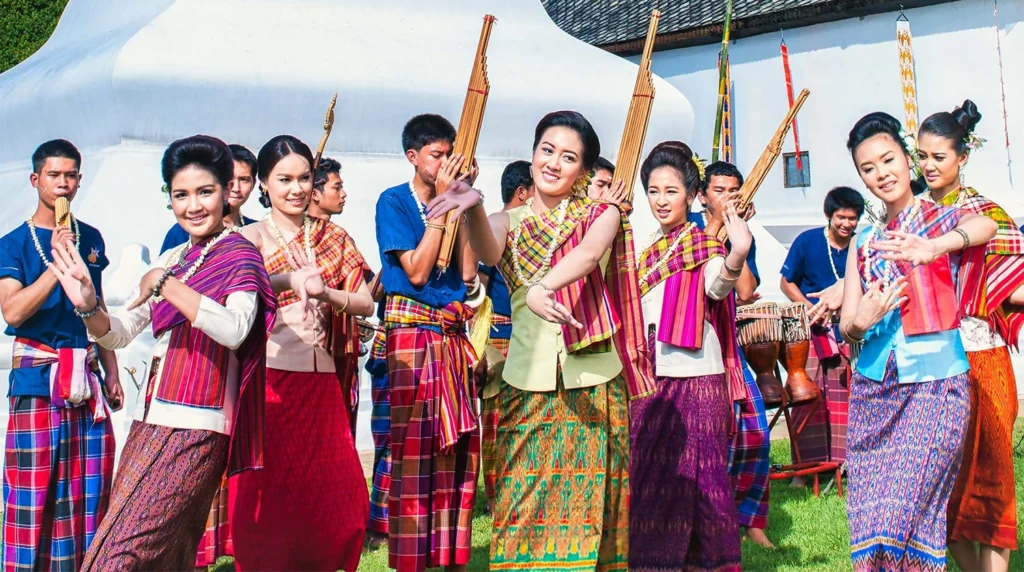
Yet the shift is not a wholesale reinvention. Traditional elements are still present, if more deliberately arranged. A section devoted to Thailand’s regions offers food, performances and workshops, along with rituals such as sand pagoda building and the gentle pouring of water over Buddha images. The difference lies in how these experiences are framed—less spontaneous, more curated.
A short walk away, Lumpini Park offers a quieter counterpart. The Saneh Art by Songkran Festival (April 11–30) focuses on installation art and atmosphere rather than activity. Sculptures by Thai artists are placed among the park’s lakes and trees, encouraging slow movement and reflection. Compared to Benjakitti, the mood here is subdued, even contemplative.
PARTY
Phuket sets for street party
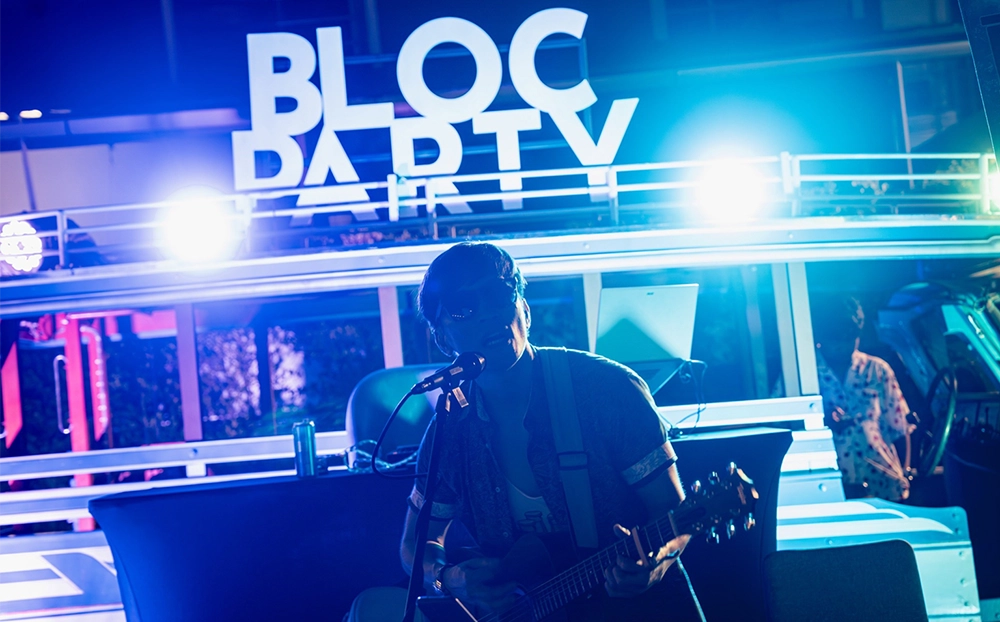
On 25 April, the streets around Courtyard by Marriott Phuket Town will take on a different rhythm. For one evening only, the hotel’s BLOC Party returns—less a hotel event, more a neighbourhood gathering—spilling into the surrounds of Phuket Old Town with food, music and a distinctly local pulse.
>> Read more
Together, the two parks present parallel versions of Songkran: one outward-facing and performative, the other inward-looking and restrained. The pairing suggests a broader shift in how Bangkok is choosing to present one of its most important festivals—not only as a cultural tradition, but as a managed, internationally legible event.
There are clear reasons for the change. Moving celebrations into defined spaces allows for better crowd control and safety, long-standing concerns in a city where Songkran has often spilled unpredictably across streets. It also makes the festival easier to navigate for visitors unfamiliar with its rhythms.
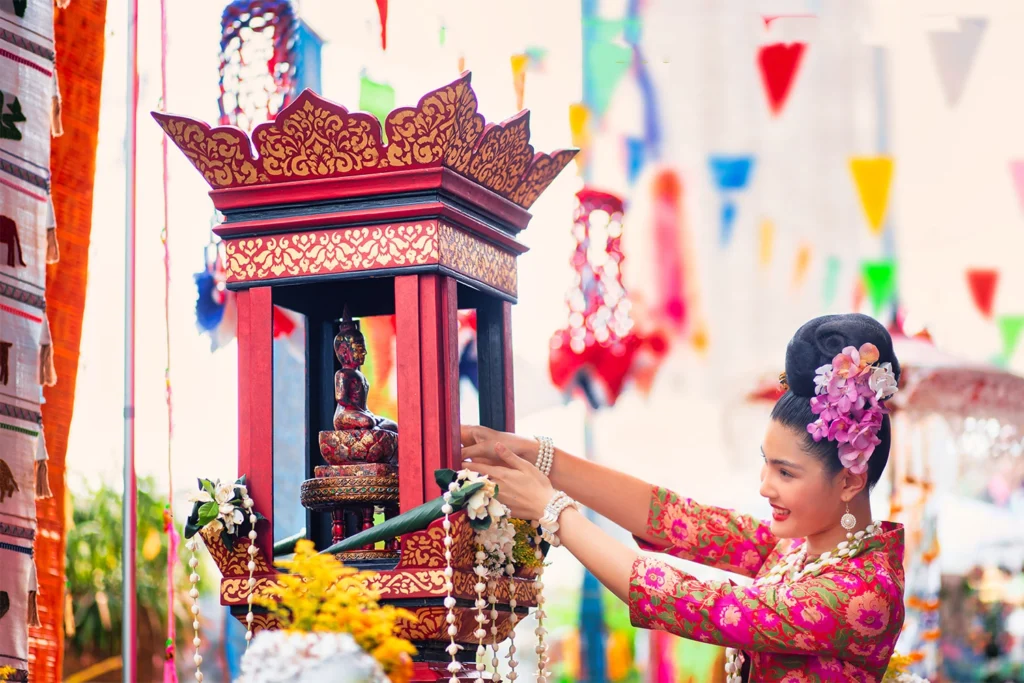
There is, too, an economic calculus. Songkran remains one of Thailand’s most important tourism draws, generating billions of baht annually and attracting hundreds of thousands of international visitors. A more structured format—spacious, accessible, and supported by infrastructure—is easier to promote on a global stage.
Elsewhere in the country, regional traditions continue much as before. In Chiang Mai, celebrations along the Ping River retain their ceremonial emphasis. In Ayutthaya, elephants once again join in the water play. Beach destinations like Pattaya and Ko Samui stretch the festivities into coastal parties.
Bangkok’s approach, however, feels indicative of a larger recalibration. As the country’s primary gateway, the capital has long shaped how Thailand presents itself to visitors. By relocating Songkran into its parks, the city is offering a version of the festival that is less chaotic, more navigable, and arguably more intentional.
The essential elements remain: water, renewal, and the marking of a new year. But in these newly central green spaces, Songkran feels less like something that overtakes the city and more like something the city is actively staging—an evolution that may well define its future.






[…] >> Read more […]
Comments are closed.