

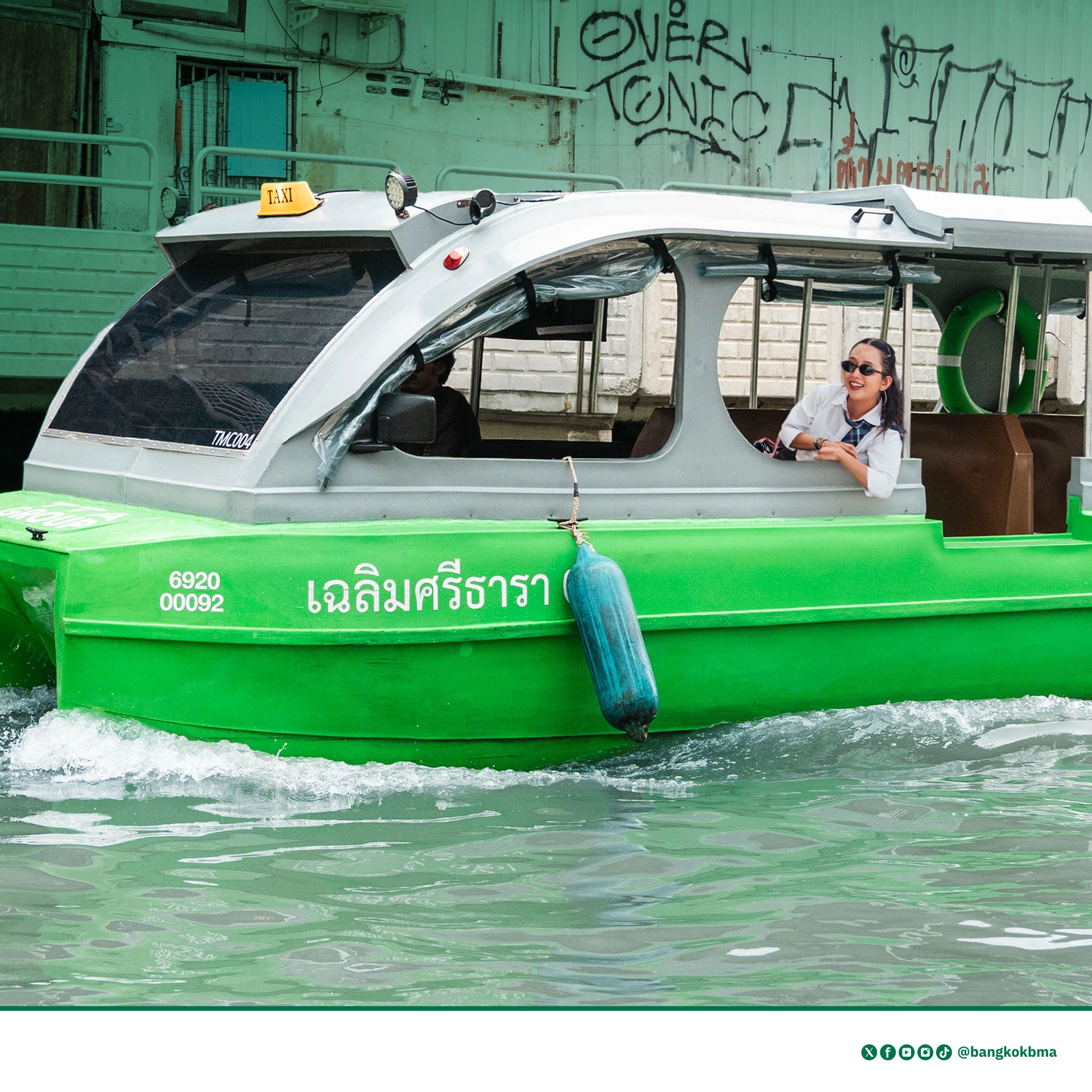
Bangkok’s canals—long overshadowed by traffic-choked roads—are finding new life as practical transport routes, and travellers can now tap into them via a fleet of electric water taxis.
Running along Khlong Phadung Krung Kasem, this low-emission service offers a quieter, cleaner alternative to the capital’s more chaotic commutes. The boats glide almost silently, a marked contrast to the roar and fumes of traditional long-tail engines, making the journey feel unexpectedly calm for a city of Bangkok’s intensity.
Each vessel carries just six passengers, so rides feel more like a shared private transfer than public transport. It’s a small detail that makes a noticeable difference—no jostling for space, no gridlock, just a breezy, slow-moving passage through the city.
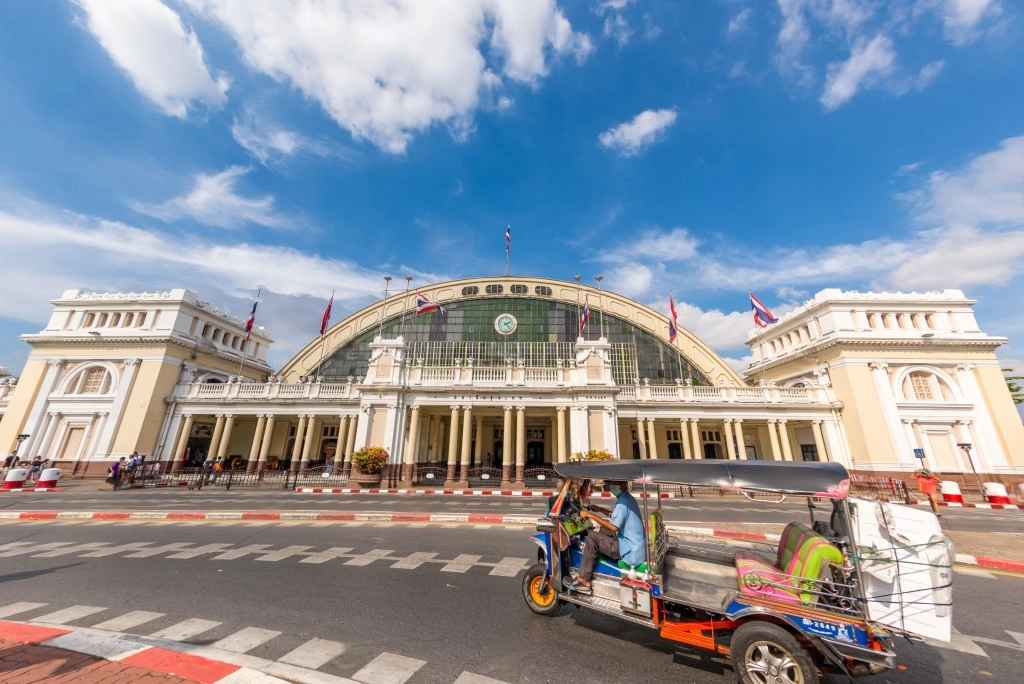
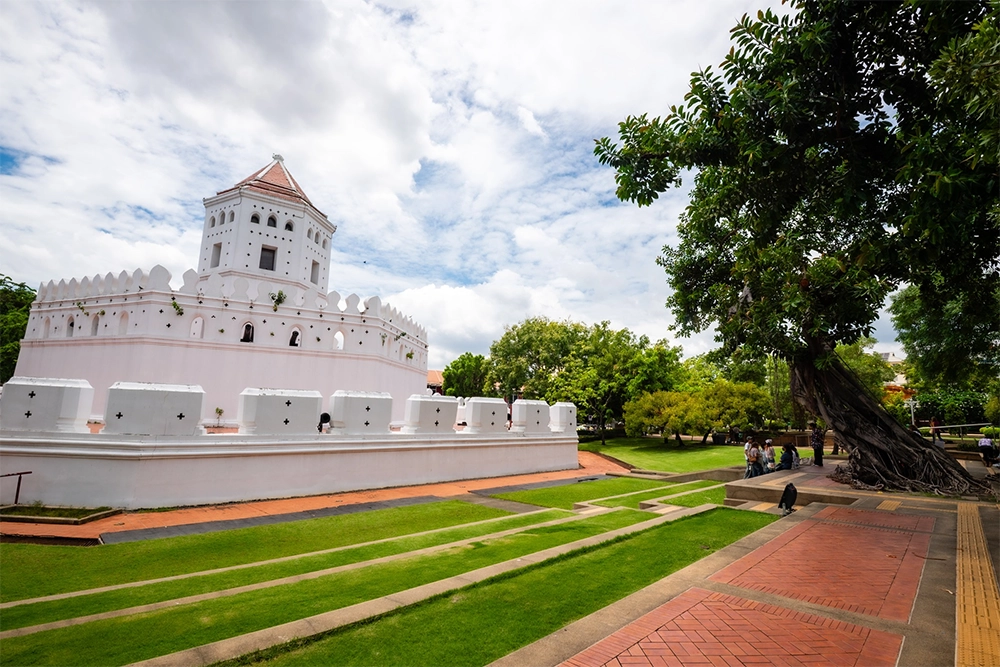
The route links 14 piers between Bangkok’s old quarters and newer districts, and it’s as useful as it is scenic. Travellers can hop on near Hua Lamphong Station for easy connections to the MRT, or disembark at Phra Sumen Fort to wander into the historic streets of Banglamphu. Food-focused stops include Thewet Market, where local snacks and old-school Bangkok flavours are within easy reach. Further along, Ratchadamnoen and Lan Luang connect to key civic and cultural areas.
VISIT BANGKOK
Hua Lamphong: The New Old Bangkok
Once the city’s main railway gateway, Hua Lamphong Station now exists in a different register of Bangkok lifeless as a transport hub than as a cultural anchor. With long-distance services shifting to Krung Thep Aphiwat Central Terminal, the historic station has not so much faded as recalibrated. Around it, the surrounding quarter has begun to feel newly legible: a dense, walkable district where temples, canals, cafés and contemporary art sit within an easy stride of one another.
>> Read more
Boats run daily from 09:00 to 17:00. To ride, download the MuvMi app, switch to “Boat” mode, and select your boarding pier. Fares are modest—roughly in line with the city’s electric tuk-tuk services.
While it won’t replace Bangkok’s main transport networks, the electric water taxi offers something they can’t: a slower, more intimate view of the city. Along the way, you’ll pass low-rise neighbourhoods, temple rooftops and pockets of everyday canal-side life that are easy to miss from the road.
For travellers willing to trade speed for perspective, it’s a refreshing way to get around—and a reminder that in Bangkok, the water still quietly shapes the rhythm of the city.
All of following locations are accessible within walking distance from stops along the electric water taxi route, making it easy to combine several sights in a single journey.
Key Landmarks & Historic Sites
Phra Sumen Fort
A restored riverside fort from the Rattanakosin era, located in a small park suitable for walking and photography.
Wat Bowonniwet Vihara
An important royal temple known for its refined architecture and historical connection to Thai royalty.
Golden Mount (Wat Saket)
A hilltop temple offering panoramic views across the old city after a short climb.
King Prajadhipok Museum
A compact museum presenting Thailand’s transition to a constitutional monarchy.
Markets & Local Life
Thewet Market
A traditional fresh market with produce, street food and everyday Bangkok atmosphere.
Thewarat Market
A smaller local market popular for ready-to-eat meals and quick snacks.
Nang Loeng Market
One of Bangkok’s oldest food markets, known for traditional Thai desserts and heritage recipes.
Neighbourhoods & Cultural Areas
Banglamphu
A historic neighbourhood with guesthouses, cafés and active street life.
Ratchadamnoen Avenue
A major boulevard linking important civic and historical landmarks.
Lan Luang Road
A quieter road featuring temples, local eateries and residential heritage architecture.









[…] >>Read more […]
Comments are closed.