
In Sukhothai, where Thailand’s first kingdom once flourished, the past is not preserved behind glass—it is walked, circled and quietly illuminated. Each year on Visakha Bucha Day, the ancient grounds of Sukhothai Historical Park become the setting for Wian Tian Takan, a ritual that feels less like a festival and more like a return.
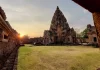
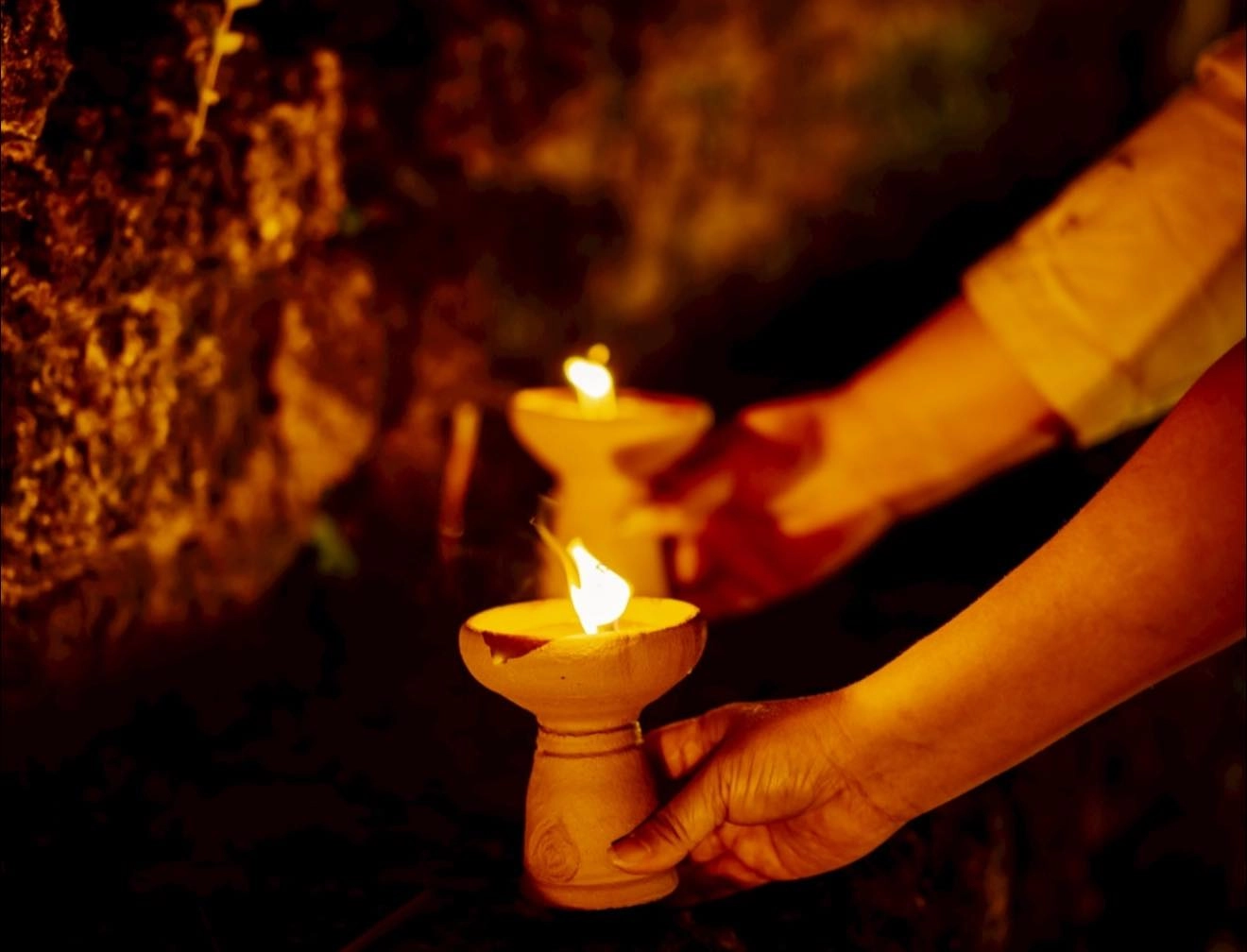
Staged at Wat Chang Lom, the ceremony unfolds after sunset, when the last of the daylight drains from the brick stupas and lotus ponds. Instead of the usual candles carried in Buddhist processions, participants work with takan—small, hand-moulded clay lamps filled with oil. One by one, they are lit and placed along pathways, terraces and the base of ancient chedis, mapping the sacred geography in points of flame.
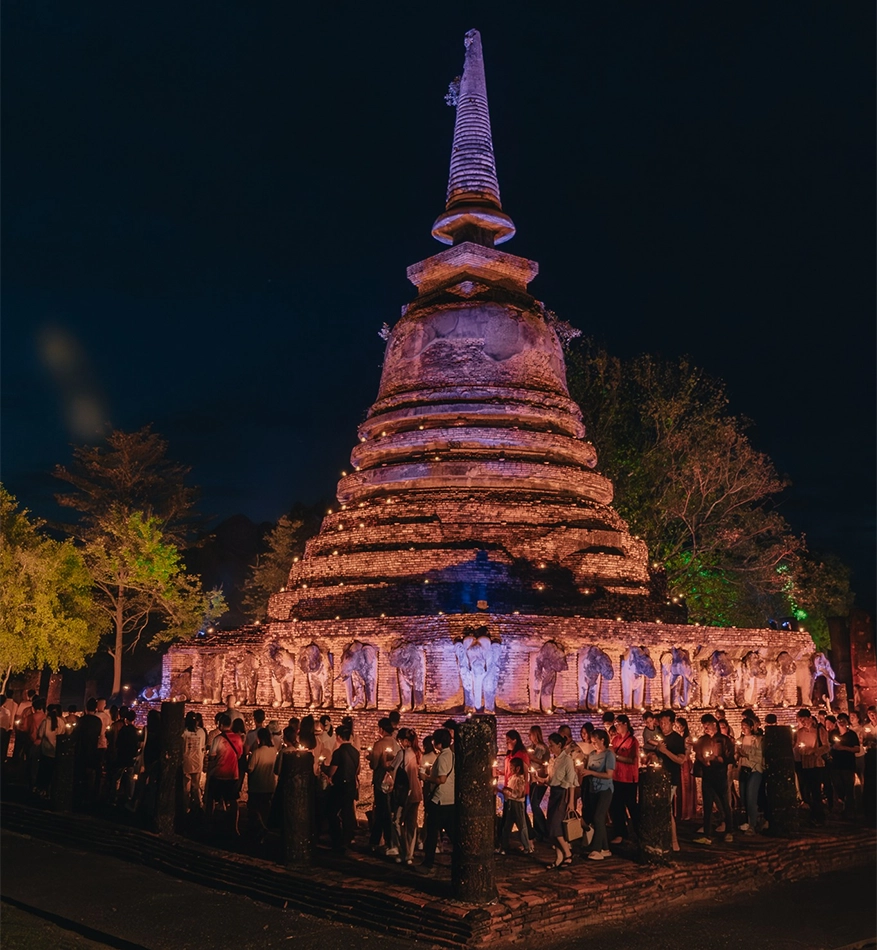
The act at the centre of the evening is wian tian: a slow, clockwise circumambulation performed in homage to the Buddha. Here, the movement is deliberately unhurried. Locals and visitors—many dressed in period-inspired Sukhothai textiles—walk the perimeter of the temple, pausing to set down lamps, their gestures echoing practices thought to date back to the Sukhothai Kingdom. The light accumulates gradually, until the ruins appear to rise from a low, flickering horizon.
Visakha Bucha Day marks three pivotal moments in the Buddha’s life—his birth, enlightenment and passing into Nirvana—and is observed across the Buddhist world. In Sukhothai, however, the emphasis leans towards continuity rather than celebration. The takan itself is a relic of earlier lifeways, once used for everyday illumination; in ritual context, it becomes a symbol of wisdom, its flame standing in for insight. Lighting one is both an offering and a meditation.
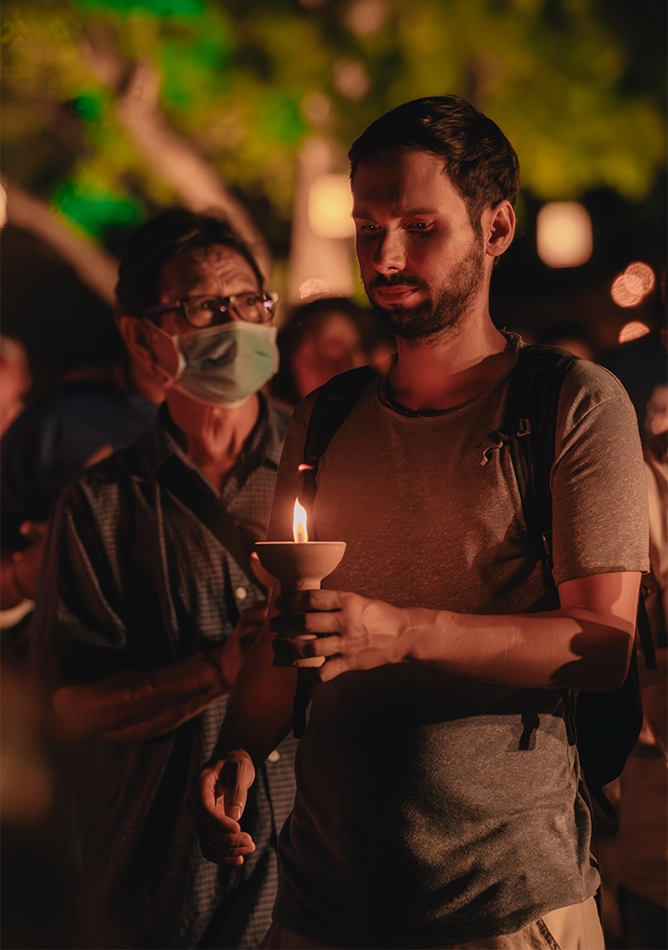
What distinguishes Wian Tian Takan from more widely known Thai festivals is its restraint. Unlike the buoyant lantern releases of the Loy Krathong Festival in Chiang Mai or the riverbank celebrations in Bangkok, this is an event built on quiet accumulation. There are no crescendos—only the steady multiplication of light across a 700-year-old landscape. Incense drifts through the colonnades; shadows lengthen and soften; the architecture reveals itself not in full, but in fragments.
Wian Tian Takan
Wat Chang Lom, east of Sukhothai Historical Park
30–31 May 2026 | 5.30pm–9pm
For travellers, the experience offers a rare convergence of ritual and setting. This is not a performance staged for an audience, but a living practice into which visitors are gently folded. A limited number of takan lamps are distributed free each evening, allowing participation in the procession. The result is an encounter that feels at once intimate and expansive—personal in gesture, collective in effect.
VISIT PHECHABURI
Phetchaburi: Flavours of the Coast
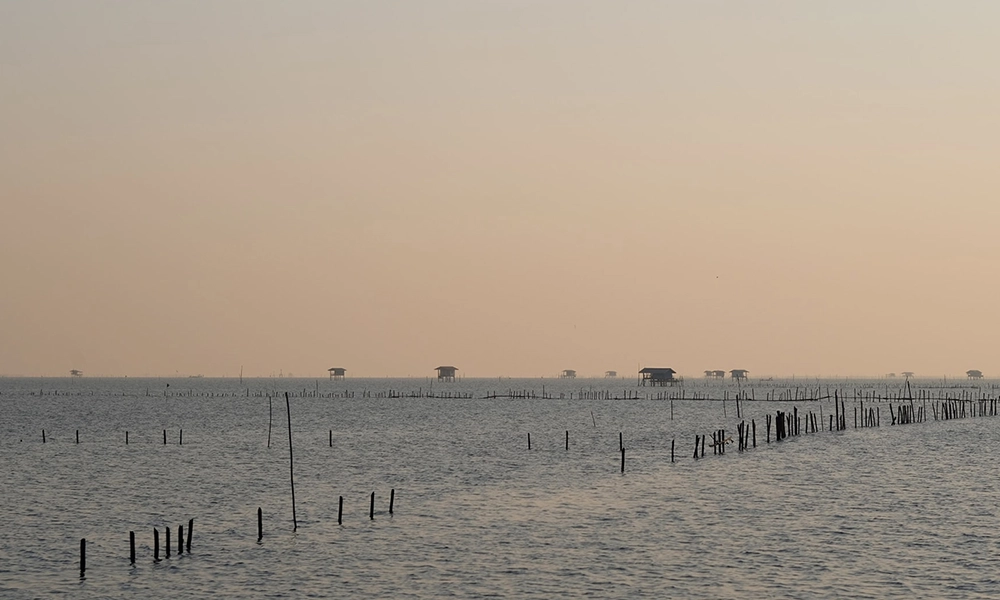
A weekend drive along the coastline of Phetchaburi unfolds as a journey through flavour and place, where seafood stalls, local kitchens, and sea-breezed roads set the rhythm of travel.
>> Read more
Arrive before nightfall and stay as the transformation takes hold. In Sukhothai, illumination is not instantaneous. It is built, flame by flame, until the ancient city glows—not brightly, but enough.
Beyond Wat Chang Lom in Sukhothai, Wian Tian ceremonies on Visakha Bucha Day (31 May) take place at Buddhist temples across Thailand. Travellers can also join processions at historic temples in Bangkok, Ayutthaya, and Chiang Mai, where candlelit circuits offer a quiet, reflective moment of merit-making and prayer.