

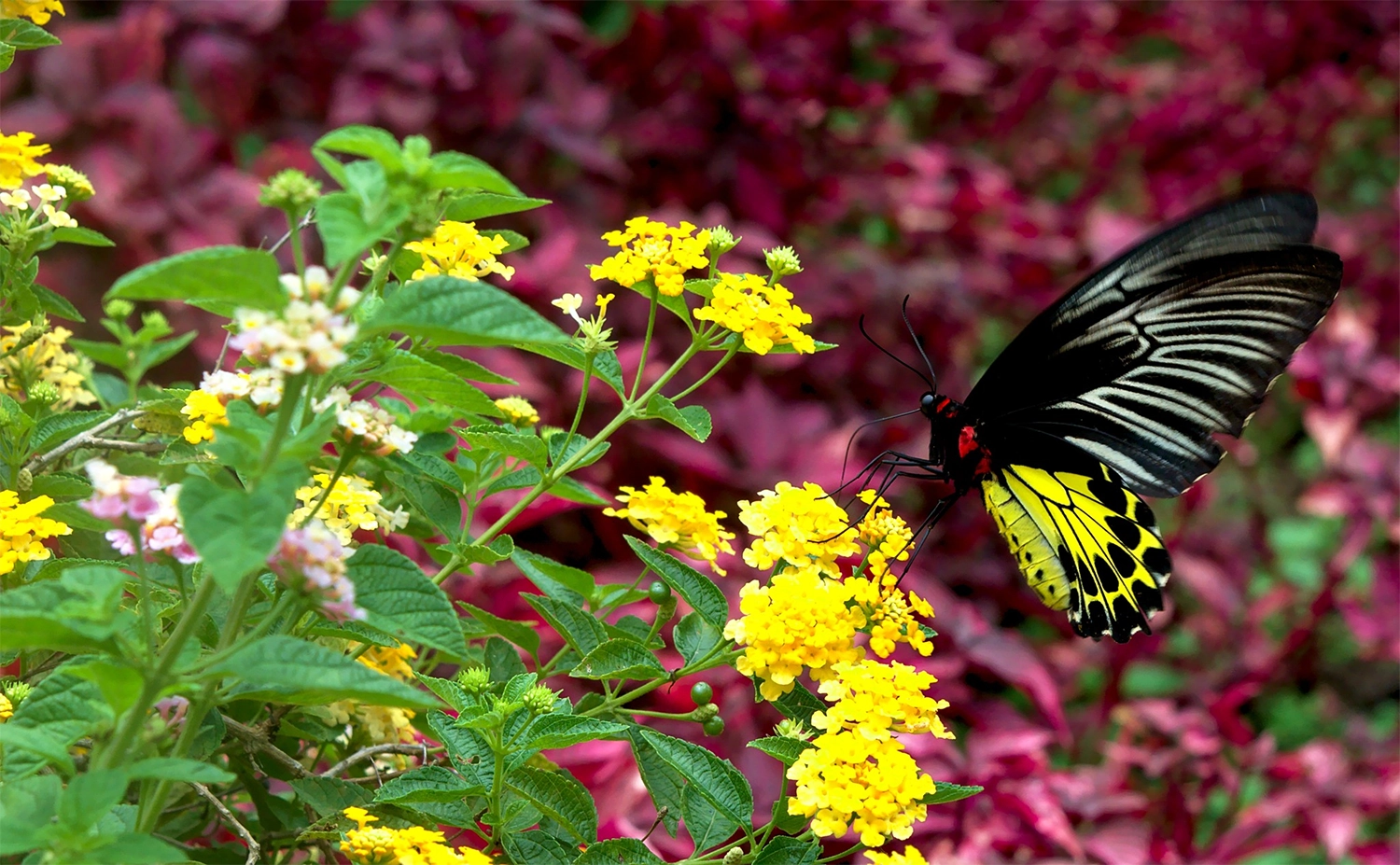
Just a short drive from Chiang Mai, the road into Mae Rim begins to climb, slipping into cooler air and a greener, quieter landscape. Tucked into these forested foothills, the Queen Sirikit Botanic Garden feels like a place designed for slow wandering—and between 1 June and 31 July 2026, it becomes especially worth the detour.
This is when the garden stages its seasonal showcase, The 60 Day Botanical Bloom: Orchids & Butterflies, a two-month window when its conservatories are at their most alive. It’s part curated display, part living ecosystem, and very much a reminder that up here in northern Thailand, nature still sets the schedule.
Start at the Orchid and Fern Conservatories, where more than 30 species of orchids—thousands of individual plants in total—are arranged across elevated walkways and shaded glasshouses. You’ll see everything from delicate native Thai varieties to bold, hybrid blooms in saturated purples, yellows and pinks. It’s not a wild jungle, but it does a convincing job of feeling like one, especially when light filters through the glass and the air hangs thick and still.
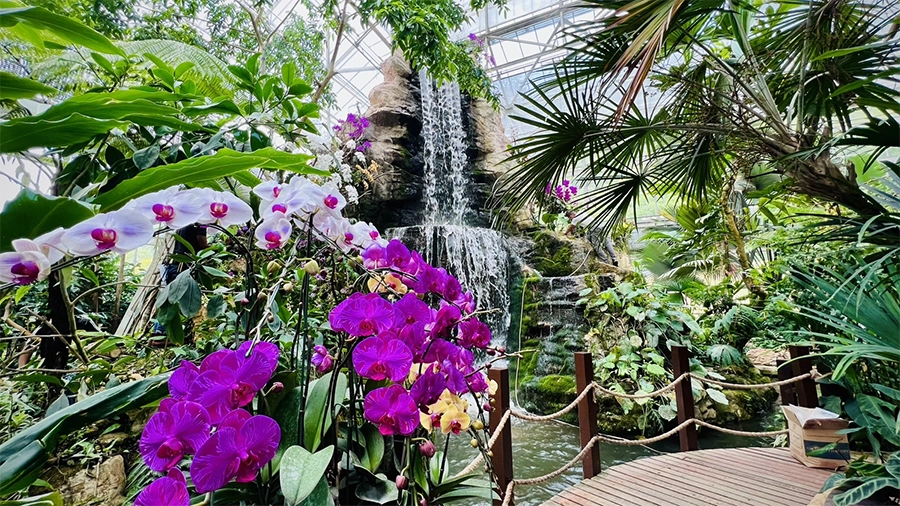
A short walk away, the Tropical Rainforest Glasshouse turns things up a notch. Inside, a 30-metre waterfall drops through layers of dense planting, sending a fine mist across the paths. The temperature rises slightly here, the humidity wraps around you, and suddenly you’re not quite in a garden anymore—you’re in something closer to a contained rainforest.
In July, a second highlight arrives: butterflies.
Inside the Aquatic Plant Conservatory at the Royal Glasshouse Complex, hundreds of butterflies begin to emerge and take flight. They drift through the space at their own pace, landing briefly on leaves or passing close enough that you can see the fine patterns on their wings. It’s not a choreographed show—more of a carefully managed life cycle unfolding in public view. The effect is gentle and immersive, especially for visitors who slow down long enough to notice.
Behind the scenes, the garden is already preparing. Orchid displays are being assembled and refined, with around a third already in place ahead of peak bloom. Nearby, butterfly pupae are maturing in controlled conditions, timed so their emergence aligns with the July release. Everything here feels scheduled, but not rushed—more seasonal rhythm than performance timetable.
What makes the experience work is the pacing. You move between glasshouses at your own speed, pausing where something catches your eye: a cluster of orchids growing improbably out of a log, mist curling around a walkway, a butterfly settling for a moment on your arm before drifting off again.
There are plenty of botanical gardens in Thailand, but this one stands out for how it uses space and climate to shift your sense of place. You’re never far from the forest, even when you’re indoors.
For travellers, it’s an easy half-day trip from Chiang Mai, though you could easily stretch it longer if you like lingering in green spaces. Bring a light jacket for the cooler conservatories, and expect to leave slightly damp from the rainforest mist—pleasantly so.
In a region better known for temples and night markets, the Queen Sirikit Botanic Garden offers something quieter: a reminder that some of northern Thailand’s most memorable moments aren’t built, but grown.