

In Thailand, paying for a bowl of noodles, a river cruise or a souvenir with nothing more than a quick scan is becoming increasingly effortless — even for foreign visitors.
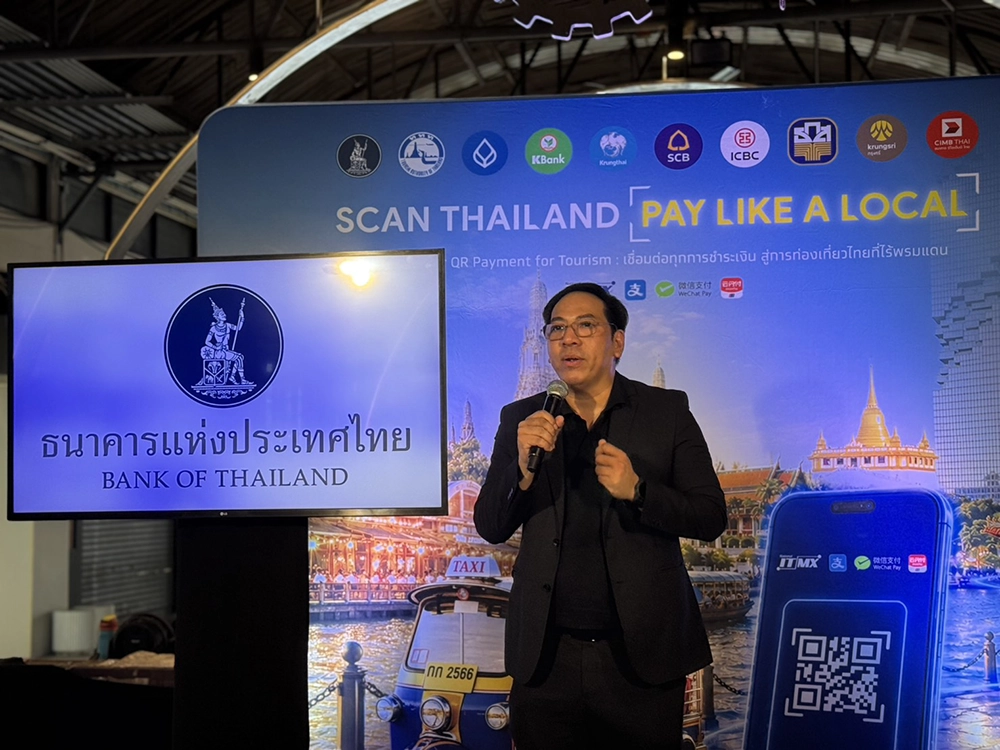
Thailand’s tourism authorities are betting that convenience could become one of the country’s most powerful competitive advantages. This week, the Tourism Authority of Thailand (TAT), in partnership with the Bank of Thailand and major financial institutions, rolled out a renewed push for Cross-Border QR Payment, a system designed to let international travelers pay in Thailand using the mobile banking apps and e-wallets they already use at home.
The initiative, branded “Pay Like a Local,” aims to remove one of travel’s lingering frictions: cash exchange.
For many visitors, especially in a country where street food stalls, night markets and neighborhood shops remain central to the travel experience, the need to carry cash or calculate exchange rates can feel increasingly outdated. The new system allows tourists to scan Thai merchant QR codes directly through familiar payment platforms, making transactions nearly seamless.

CHANTHABURI
Exploring Chanthaburi’s Chantaboon Waterfront
In an age where digital screens dictate our movements and connections, the essence of place and community can easily slip away. But amidst the rapid flow of information, there are places like Chanthaburi’s Chantaboon Waterfront that beckon us back to reality.
>> Read more
The project currently supports travelers from eight countries and one economic region — China, Singapore, Malaysia, Indonesia, Vietnam, South Korea, Hong Kong, Laos and Cambodia — covering some of Thailand’s most important inbound tourism markets.
For Thai businesses, particularly small and medium-sized enterprises, the shift is about more than convenience. It is also about access.
By joining the cross-border payment ecosystem, merchants position themselves to better serve a generation of travelers who increasingly expect digital-first experiences. From luxury malls to family-run eateries, businesses that can accept mobile payments may gain an edge in capturing tourist spending.
To expand participation, Thai businesses are being encouraged to register for merchant QR services through eight participating banks: Krung Thai Bank, Bangkok Bank, Kasikornbank, Siam Commercial Bank, Bank of Ayudhya, ICBC (Thai), the Bank for Agriculture and Agricultural Cooperatives, and CIMB Thai Bank. The ecosystem also extends beyond Thailand’s borders through partnerships with major Chinese payment platforms including Alipay, WeChat Pay and UnionPay, helping ensure smoother transactions for one of Thailand’s most important visitor segments.
The campaign’s latest promotional event took place at Asiatique The Riverfront in Bangkok on Thursday, following an earlier pilot program in Udon Thani. There, tourism officials and banking partners worked directly with merchants, encouraging them to adopt the system and better understand the spending behavior of digitally savvy travelers.
Behind the project is a broader ambition: to modernize Thailand’s tourism infrastructure for an era in which travel is shaped as much by digital convenience as by destination appeal.
As countries across Asia compete for high-value visitors, seamless payment systems are becoming part of the tourism experience itself. In that context, Thailand’s push toward cross-border QR payments is less about technology alone than about reducing friction — allowing visitors to spend less time thinking about how to pay, and more time enjoying where they are.