
Each December, Mae Hong Son’s Shan food festival rises out of the mountain mist like a beacon of flavour, drawing locals and travellers into one of northern Thailand’s most captivating cultural celebrations. Set in a remote mountain valleys, the five-day “Open Muang Tai” food festival turns the quiet Tai Yai heartland into a vibrant tapestry of herbal aromas and ancestral recipes brought to life.
From 6–10 December 2025, the Tai Yai Study Centre in Chong Kham becomes a centerstage for the Tai Food Festival — or Open Muang Tai.
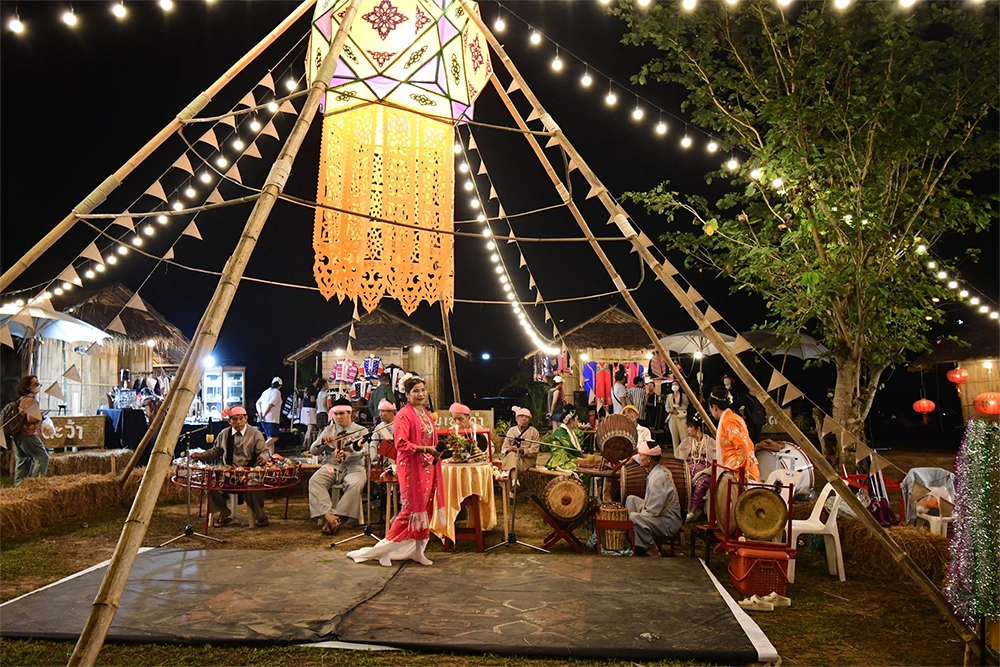
As dusk cools the mountain air, locals drift in on motorbikes, children weave through the crowds with skewers in hand, and travellers follow trails of woodsmoke and chilli into a labyrinth of food stalls. For those curious about Shan culture beyond temple murals and museum displays, this is where it breathes and cooks and sings.
A culinary map of the mountains
Food here is not just sustenance but a record of highland living — shaped by cool nights, forest herbs and cross-border movement along the Myanmar frontier. Shan cooking is recognisable yet distinctly its own: softer herb tones than northern Thai cuisine, deeper smoke, a generosity of fermented elements.
Start with Shan “khao soi”, whose thick, chewy noodles made from sticky rice flour are served in a gentle tomato broth — a world apart from the coconut-rich northern Thai version. Nearby, vendors prepare “khao ram fuen”, silky sheets of millet-and-flour jelly sliced, fried until crisp at the edges, and served with a warming soy-bean curry.
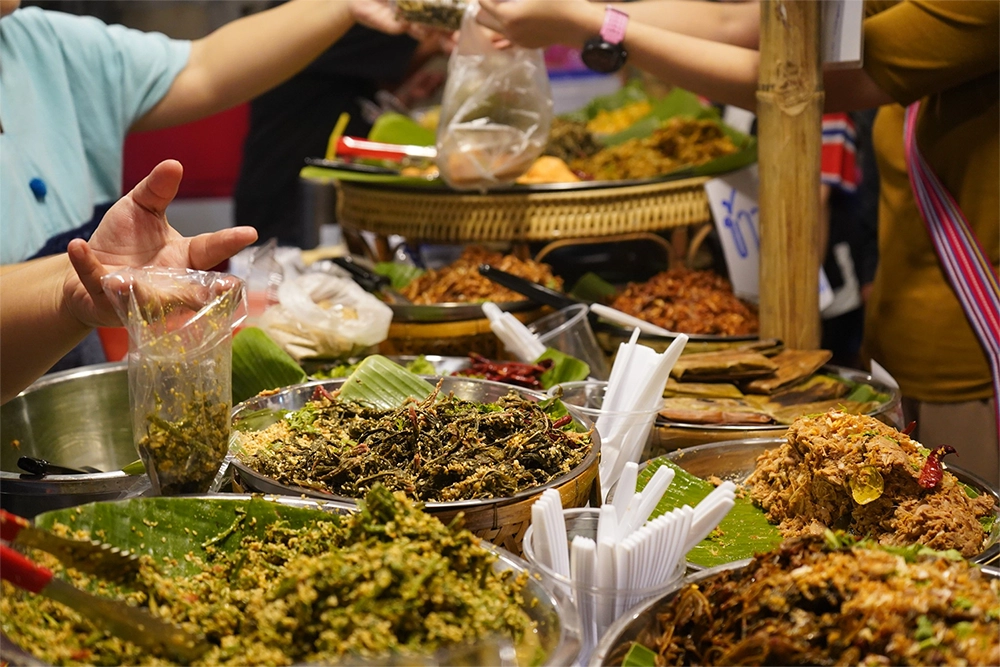
The region’s beloved “laphet thoke”, a salad of pickled tea leaves and crunchy fermented beans, carries the tang of mountain air, while Shan-style nam ngiao leans earthier and more aromatic than its Lanna cousin.
For heartier appetites, there’s “sai ua”, a coarse, herb-packed sausage made to family recipes, and “oob”, a slow-cooked pork or chicken curry infused with forest spices. Adventurous eaters seek out chilli-stuffed bamboo shoots, fiery and fragrant, or golden “khang pong”, papaya fritters fried to a delicate crunch. Even the snacks — sesame-dusted sticky rice cakes, soft inside and crisp outside — feel rooted in the hills.
What elevates the feast is the storytelling woven into it. Many cooks share which aunt or grandmother passed down a recipe, or why a dish belongs to a particular ceremony. Food here is an heirloom — eaten, remembered, and carried forward.
Where culture takes the stage
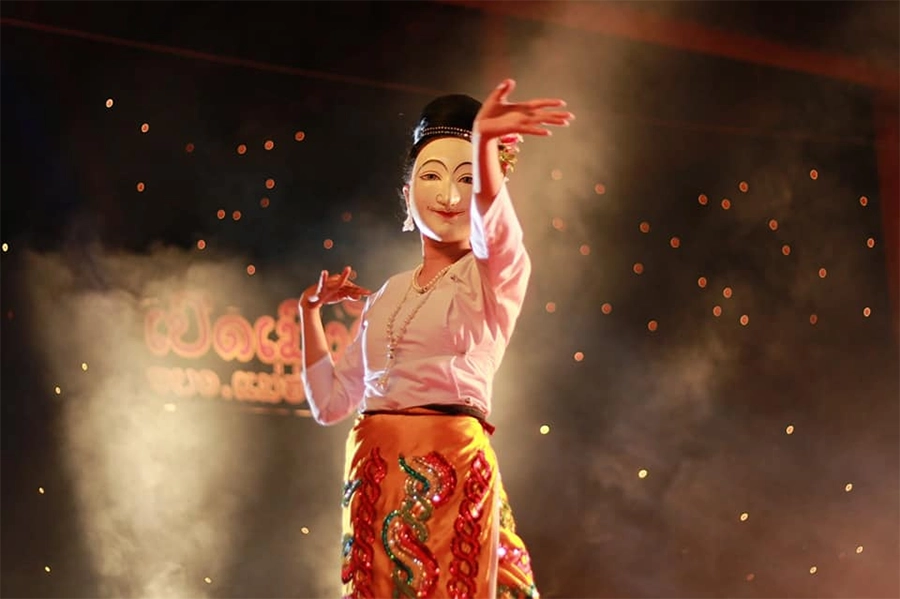
As the evening deepens, the festival shifts rhythm. On a small open-air stage, dancers in bright Shan silks execute slow, circular steps to the sound of drums and long-necked lutes. Around them, reconstructed village scenes represent the province’s seven ethnic groups, each offering a glimpse into their crafts, textiles and traditions.
Unlike large-scale cultural showcases elsewhere, these performances feel less curated and more communal — created for pride rather than spectacle.
Crafting with the community
This year’s festival expands its hands-on workshops, inviting visitors to try their hand at traditional Shan crafts. You can learn “paan soi” (Tai-style metal cutwork), shape delicate flower cones in the “suay dok” tradition, or carve intricate “tung sai moo” paper decorations used in local ceremonies. Led by master artisans, these slow-craft sessions offer a rare chance to learn skills passed down through generations — shared with the region’s signature northern warmth.
A quirky and much-loved tradition returns this year: the tourism initiative that allows visitors to exchange hotel receipts for a hand-made Shan “yaam bag”. Part souvenir, part community support, it’s a thoughtful reminder of how closely tourism and local livelihoods intertwine.

ARTS AND CULTURE | THAILAND VISIT
A Journey Through Bangkok’s Historic Mosques
Amid Bangkok’s shimmering skyline and gilded temple spires lies a lesser-known story: the city’s historic mosques—sacred spaces that whisper tales of migration, trade, and cultural exchange. Beyond their spiritual significance, these architectural gems stand as living chronicles of Bangkok’s diverse heritage, shaped by centuries of global influences.
>> Read more
A festival framed by mist
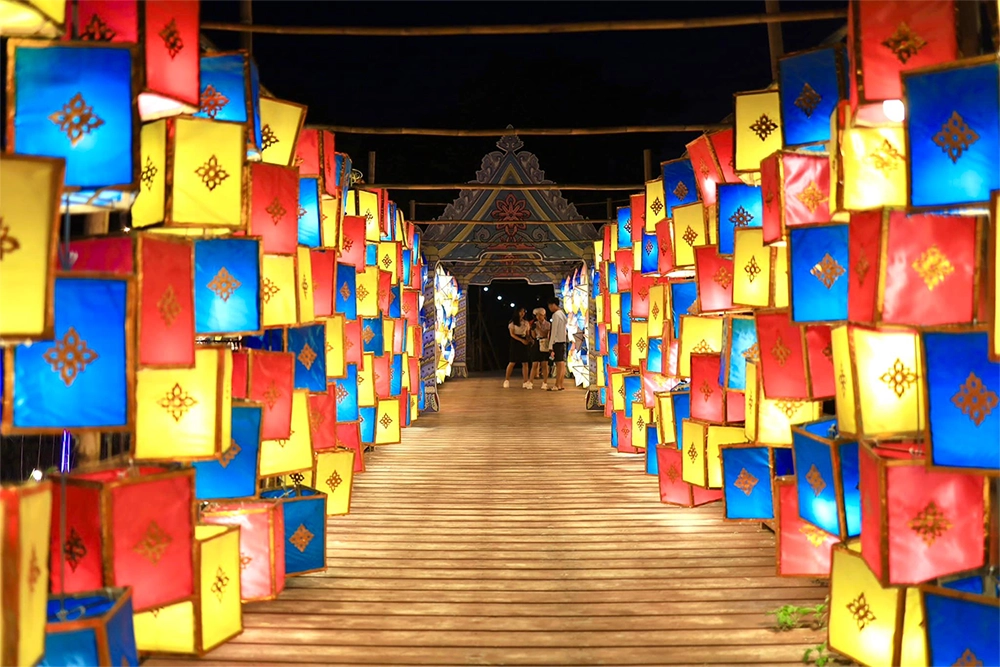
Wander further and the festival reveals more: stalls of woven cotton, bamboo utensils, herbal balms, and lantern-lit pathways that glow softly against the night sky. The setting — Mae Hong Son’s calm, mountain-ringed basin — lends the event its quiet magic.
Often called the “Land of Three Mists,” the province is known for its cool mornings, warm afternoons and breezy evenings — the perfect atmosphere for a bowl of steaming broth or a plate of fried tofu shared among strangers.
The Tai Food Festival doesn’t chase spectacle or scale. Instead, it offers something far rarer: an invitation into the everyday pride of a community, told through flavour, craftsmanship and shared space.
For travellers seeking a deeper, more personal encounter with northern Thailand, this celebration of Shan culture is a journey worth the winding road.
Getting to Mae Hong Son
Mae Hong Son is accessible from Chiang Mai by public bus or minivan via the scenic Mae Hong Son Loop, a famously winding mountain route taking around 6–8 hours. Services depart from Arcade Bus Station, with the popular town of Pai offering a convenient stop along the way.