
Chiang Mai has long drawn visitors for its temples, markets and mountain-fringed setting. But beyond its visual appeal, the city reveals something less immediately visible: a culture of craft that has never quite receded into the past.
This is the legacy of the former Lanna kingdom, whose capital Chiang Mai once was — and, in many ways, still is. Here, craft is not curated behind glass or revived for demonstration. It remains embedded in daily life: in the construction of buildings, in the cadence of ritual, in the textures of clothing and objects that continue to be made, used and exchanged.
That continuity has drawn international recognition. When Chiang Mai was designated a City of Craft and Folk Art by UNESCO’s Creative Cities Network, the accolade affirmed what is already evident on the ground — that artistic traditions here persist not as heritage alone, but as a working system of knowledge.
To understand this, it helps to leave the city centre.
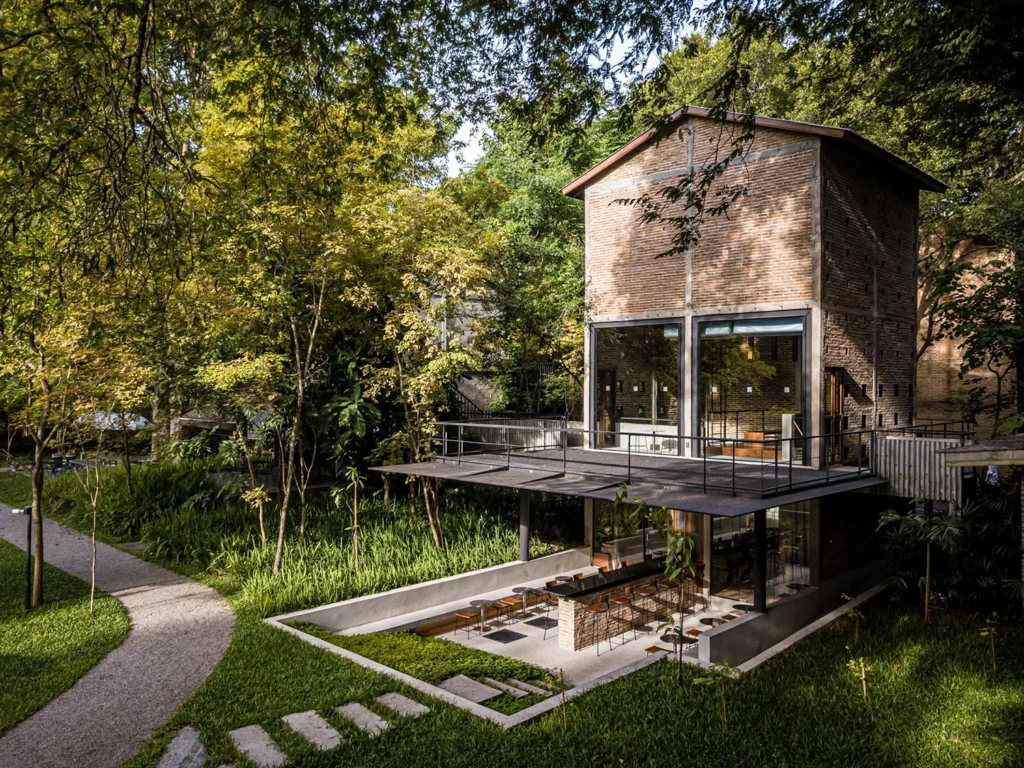
South of Chiang Mai, in San Pa Tong district, a cluster of brick structures rises unexpectedly from a green landscape. At Kao Mai Lanna Resort, former tobacco curing barns from the mid-20th century have been left largely intact, their utilitarian forms softened by trees, courtyards and climbing plants.
The buildings, once central to the region’s agricultural economy, now house a café, a small museum and a scattering of guest rooms. But their original function remains legible: brick walls perforated for ventilation, high wooden beams designed to hold drying leaves. Rather than erasing the past, the restoration allows it to remain visible — a quiet example of how industrial memory can be absorbed into the present.
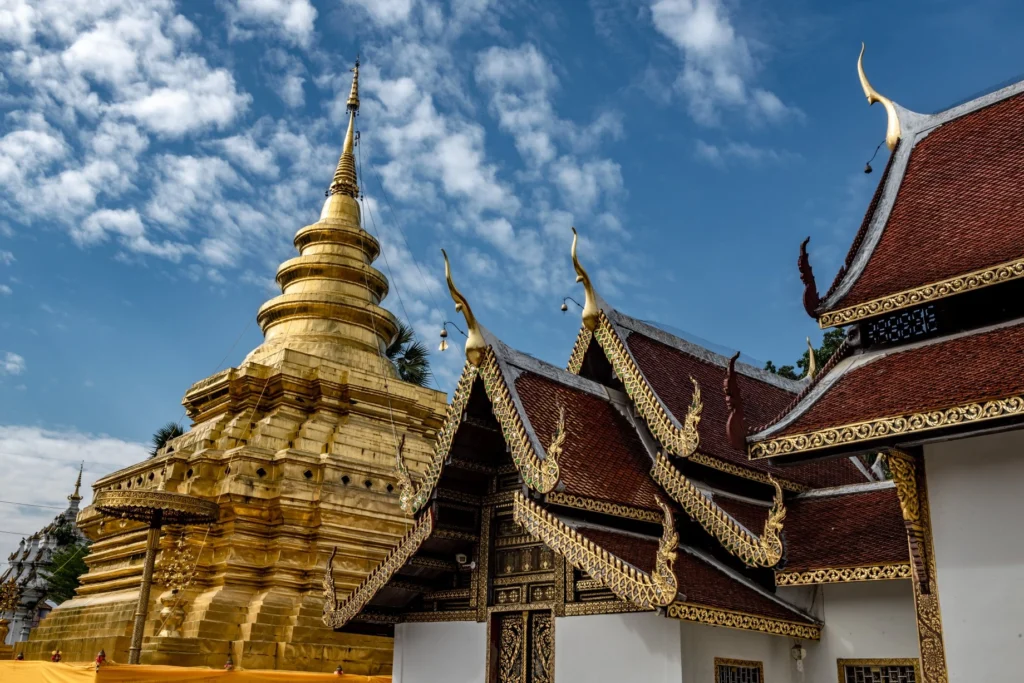
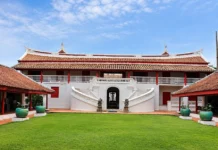
Further south, at Wat Phra That Si Chom Thong Worawihan, craft takes on a different register — one shaped by faith. Founded more than five centuries ago, the temple continues to serve as both a spiritual centre and a custodian of artisanal practice.
Inside, ritual objects in silver and gold reflect a lineage of metalwork refined over generations. Elsewhere in the temple grounds, preparations for the annual Mai Kham Pho procession draw together community members who carve wooden supports to be offered to sacred Bodhi trees. The work is not staged for visitors. It is part of an ongoing cycle, where making and meaning remain inseparable.
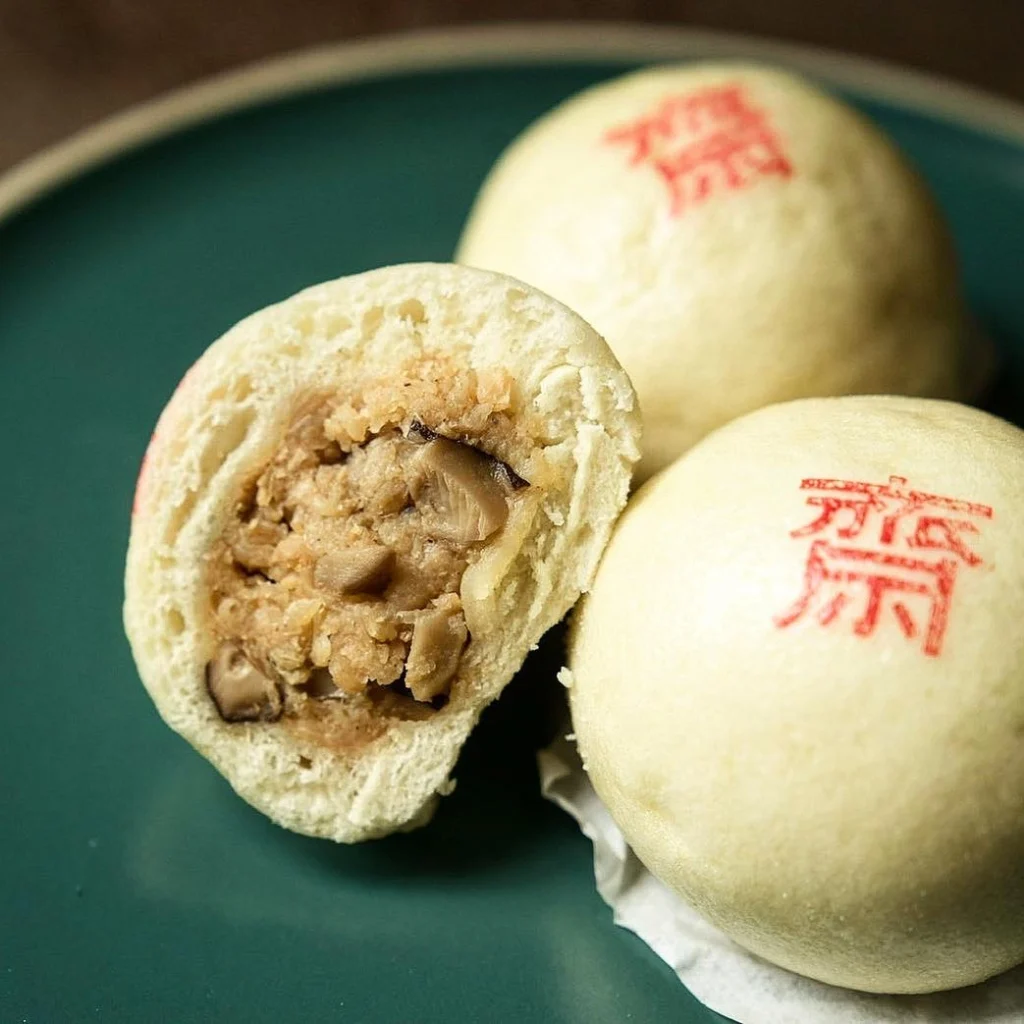
Inside Bangkok’s Old Quarters
A Stroll Through Song Wat
Tucked within Bangkok Chinatown, Song Wat Road traces the city’s mercantile past along the Chao Phraya River. Once a bustling spice trade hub, it now blends centuries-old shrines and warehouses with contemporary galleries, Michelin-starred dining and hidden cafés, offering a layered neighbourhood best explored on foot.
>> Read more
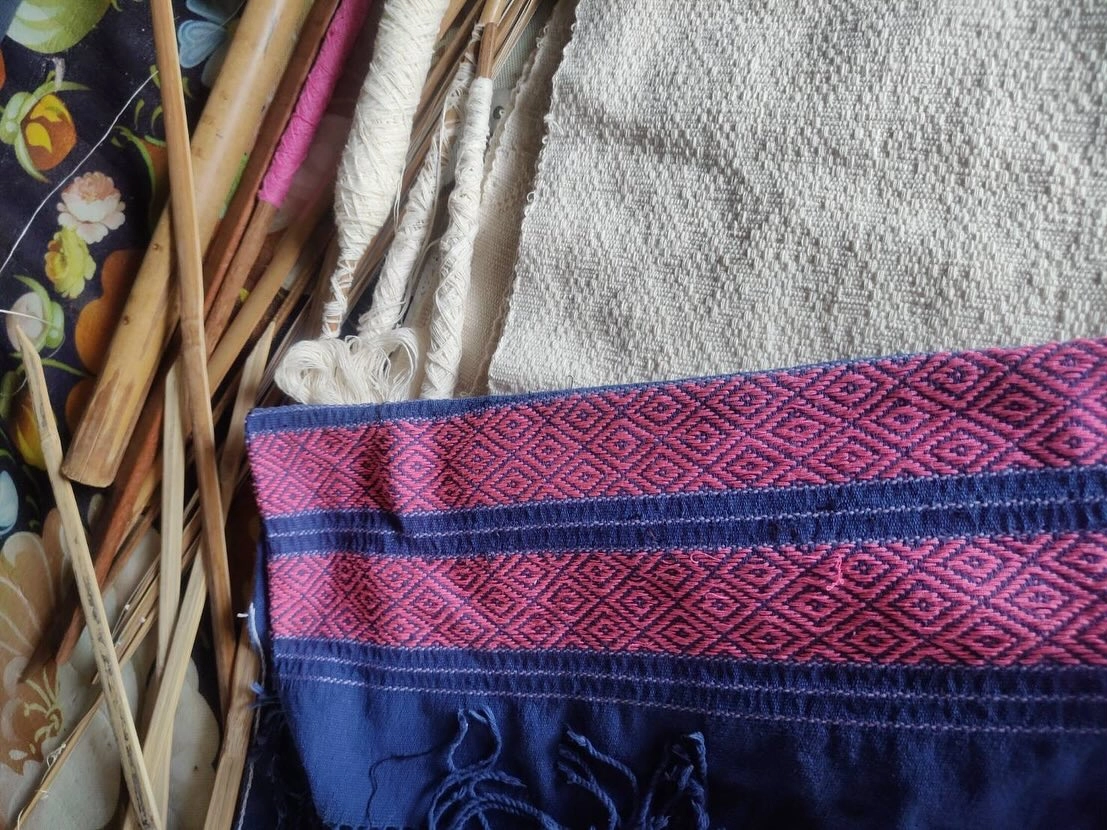
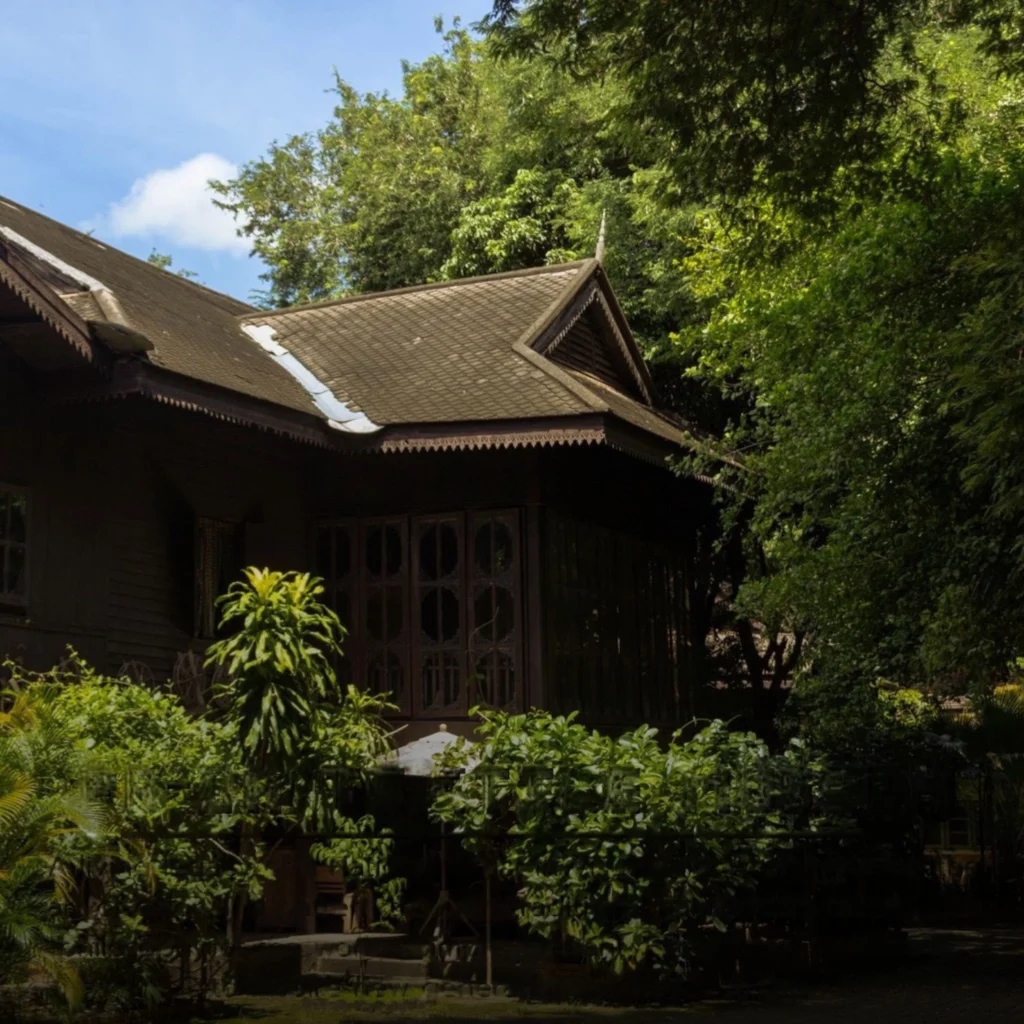
Nearby, in a quiet residential compound, the Pa-Da Cotton Textile Museum offers a more intimate view of this continuity. Looms sit alongside skeins of hand-spun cotton; fabrics dyed with bark and leaves carry the muted tones of the surrounding landscape.
The museum, founded by the late National Artist Saeng-da Bunsiddhi, functions as both archive and workshop. Women from the community continue to weave here, passing on techniques not through formal instruction but through repetition and proximity — the slow transmission of skill that resists easy preservation.
Yet Chiang Mai’s craft culture is not confined to tradition. It extends into a contemporary design scene that draws on the same foundations without treating them as fixed.
In Doi Tao district, the fashion label Satu works with local artisans to produce garments from hemp and naturally dyed cotton. The designs are understated, often concealing hand-drawn batik motifs on the inside of a piece — a gesture that feels less like decoration than memory.
These garments appear at markets like Jing Jai, or through occasional pop-ups, but their origins lie in the villages where they are made. Travellers who venture there will find fewer showrooms than conversations: informal workshops, shared meals, the rhythms of daily work continuing largely unchanged.
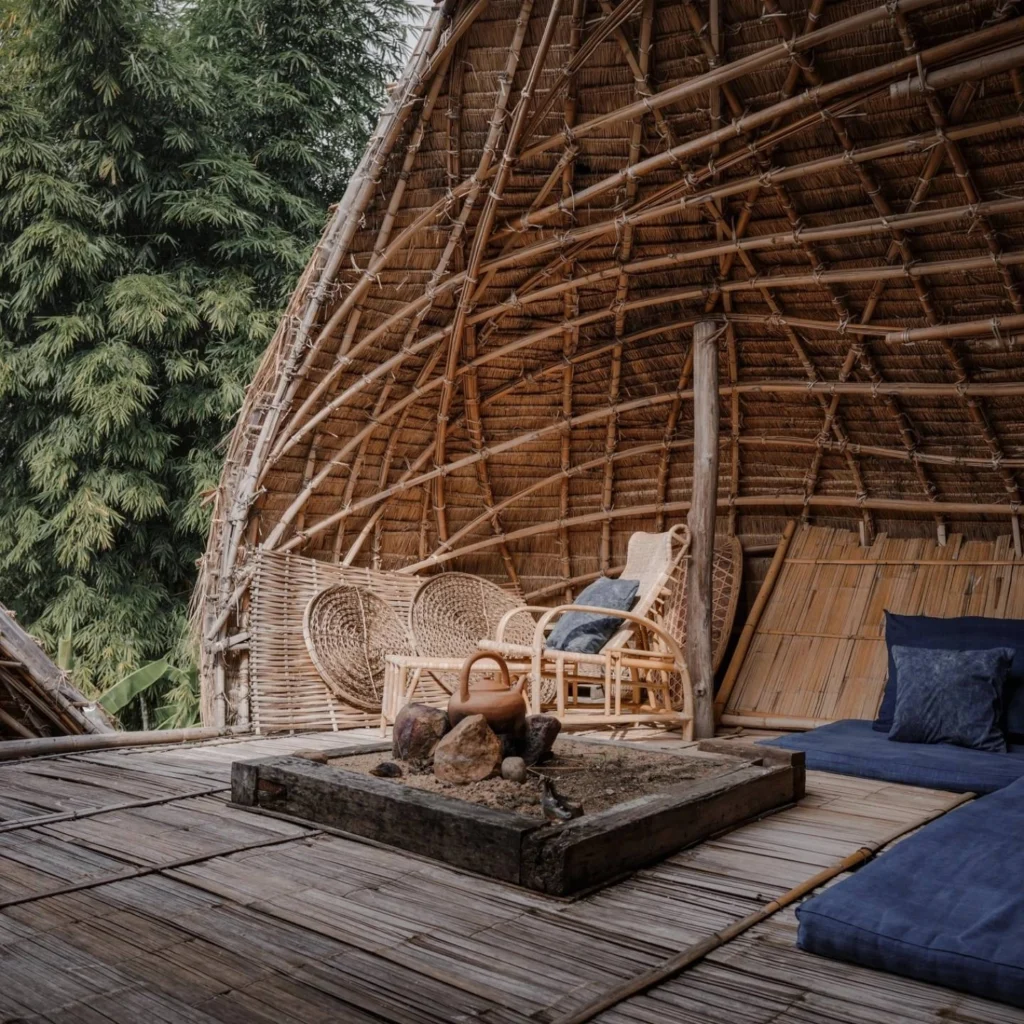
Taken together, these places form a kind of dispersed map — not of attractions, but of relationships between past and present.
As Chiang Mai continues to evolve, its identity as a UNESCO city feels less like a culmination than an ongoing negotiation. The question is not how to preserve tradition, but how to live with it — how to allow it to adapt without losing its meaning.
For visitors, the experience can be subtle. It is found less in spectacle than in observation: in a building reused rather than replaced, in a ritual performed without announcement, in the quiet persistence of hands at work.
In Chiang Mai, craft endures not because it is protected, but because it remains necessary.