


Thailand’s Cabinet has approved the cancellation of a 60-day visa exemption scheme for 93 countries, reversing a policy introduced two years ago to boost post-pandemic tourism, officials said.
Tourism and Sports Minister Surasak Phancharoenworakul said after the Cabinet meeting that the country will return to a standard 30-day visa-free stay for most eligible nationalities. The decision also removes special arrangements that had allowed some countries to benefit from overlapping visa exemptions.
Surasak said the Visa Policy Committee will reassess entry rules on a country-by-country basis, taking into account both security concerns and economic and tourism priorities. He added that affected countries will revert to their previous visa conditions, typically a 30-day stay, while some may see limits reduced to 15 days depending on travel patterns.
The minister said the shift reflects a policy focus on “quality tourists” rather than increasing visitor numbers alone.
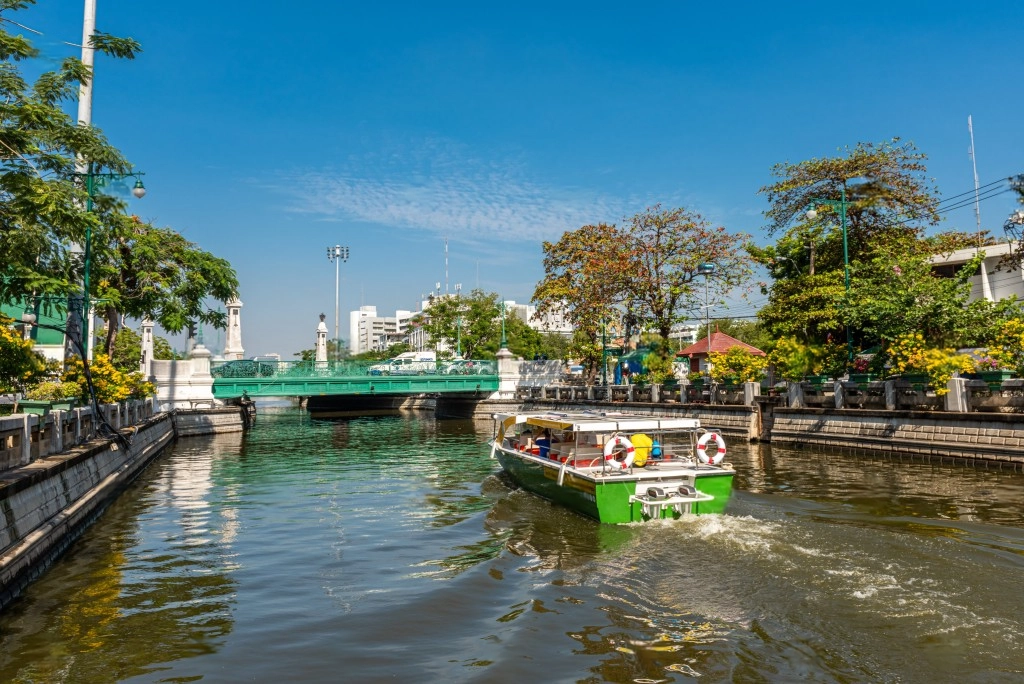
VISIT BANGKOK
Hua Lamphong: The New Old Bangkok
Once the city’s main railway gateway, Hua Lamphong Station now exists in a different register of Bangkok lifeless as a transport hub than as a cultural anchor. With long-distance services shifting to Krung Thep Aphiwat Central Terminal, the historic station has not so much faded as recalibrated. Around it, the surrounding quarter has begun to feel newly legible: a dense, walkable district where temples, canals, cafés and contemporary art sit within an easy stride of one another.
>> Read more
Authorities cited concerns that some foreign nationals had misused the extended visa exemption to carry out illegal activities, including operating nominee-owned businesses, working without permits, and using Thailand as a base for transnational crimes such as call-centre scams.
The 60-day exemption, introduced in 2024, was part of efforts to revive tourism and support economic recovery. However, officials said most foreign visitors stay in Thailand for about nine days on average, limiting the practical impact of longer permitted stays for the broader tourism market.
The government said the change is not expected to significantly affect key tourism segments, but will strengthen oversight of long-stay entry privileges and reduce opportunities for abuse.
93 countries affected by policy change
Europe — 38 countries
Andorra, Austria, Belgium, Bulgaria, Croatia, Cyprus, Czech Republic, Denmark, Estonia, Finland, France, Germany, Greece, Hungary, Iceland, Ireland, Italy, Latvia, Liechtenstein, Lithuania, Luxembourg, Malta, Monaco, Netherlands, Norway, Poland, Portugal, Romania, San Marino, Slovakia, Slovenia, Spain, Sweden, Switzerland, Ukraine, United Kingdom, Albania, Kosovo
Asia & Middle East — 32 countries
Bahrain, Brunei, China, Georgia, Hong Kong, India, Indonesia, Israel, Japan, Jordan, Kazakhstan, Kuwait, Laos, Macau, Malaysia, Maldives, Mongolia, Oman, Philippines, Qatar, Saudi Arabia, Singapore, South Korea, Sri Lanka, Taiwan, Turkey, United Arab Emirates, Uzbekistan, Vietnam, Bhutan, Cambodia, Russia
Americas & Caribbean — 15 countries
Brazil, Canada, Colombia, Cuba, Dominica, Dominican Republic, Ecuador, Guatemala, Jamaica, Mexico, Panama, Peru, Trinidad and Tobago, United States, Uruguay
Oceania & Pacific — 5 countrie
Australia, Fiji, New Zealand, Papua New Guinea, Tonga
Africa — 3 countries
Mauritius, Morocco, South Africa












[…] >> Read more […]
Comments are closed.