
From the top of an old stone fort at Hua Khao Daeng, the logic of Songkhla reveals itself.
Below, fishing boats cross a broad lagoon. Beyond a narrow strip of land lies the Gulf of Thailand. Mountains rise abruptly from the water, and islands interrupt the horizon. Scattered among them are the remains of a trading city that once looked outward to Java, China, India and the wider maritime world.
The view is beautiful, but it also explains something unusual about Songkhla.
The city moved.
Not metaphorically, through redevelopment or changing fortunes, but physically. Over several centuries, Songkhla shifted from the fortified port of Singora at Hua Khao Daeng to Laem Son across the water, then moved again in the 19th century to Bo Yang, the old town visitors explore today.
War pushed it. Trade pulled it. Mountains constrained it. Fresh water became scarce. New communities arrived.
Through all those upheavals, one thing remained: Songkhla Lake.
Today, the city’s migrations can still be traced around its shores, from ruined hilltop forts and quiet Buddhist temples to Chinese shophouses, mosques, shrines, street murals and coffee shops. Together, these places form part of a cultural landscape that Thailand hopes will eventually be inscribed on the UNESCO World Heritage List.
But Songkhla’s story begins not with monuments, but with water.
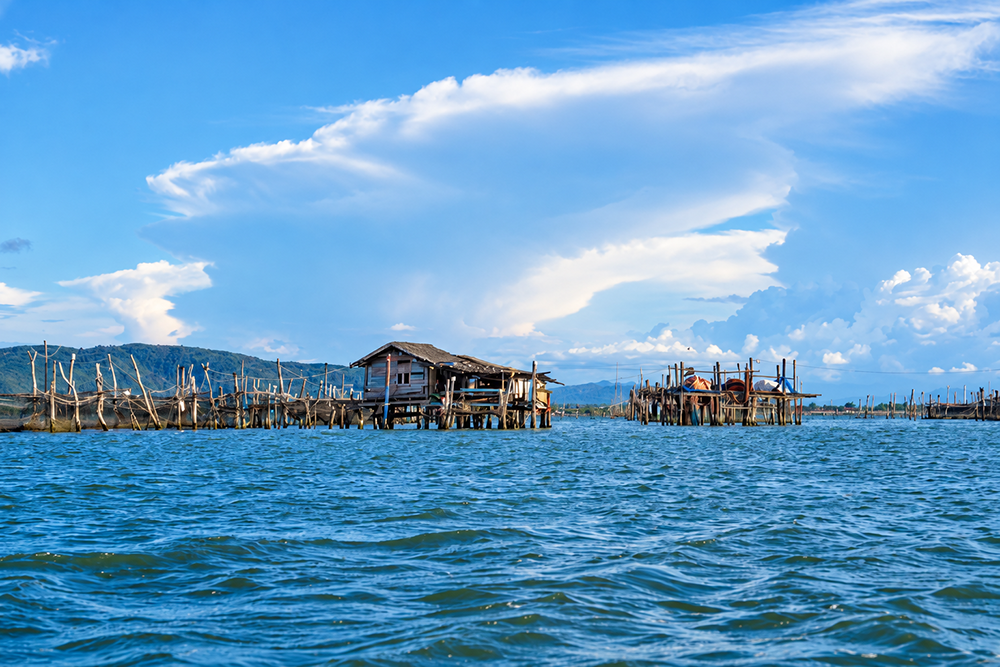
A City Between Two Seas
Songkhla is sometimes called the “city of two seas.” To the east is the Gulf of Thailand. Inland lies Songkhla Lake, part of a vast coastal lagoon extending north into Phatthalung Province.
The lagoon is not entirely fresh and not entirely salt. Water descends from surrounding mountains and mixes with tides entering from the Gulf, creating zones of fresh, brackish and saline water.
For centuries, this shifting aquatic environment provided far more than scenery. It supplied fish and water for agriculture, connected settlements and gave ships protection from the monsoon-driven seas beyond.
Communities formed around its shores. Canals were dug and reservoirs built. Fishing villages and farming settlements developed, while merchants sailing between China, India and Southeast Asia brought goods, religions, languages and ideas.
Near the lagoon’s entrance, one settlement became particularly powerful.
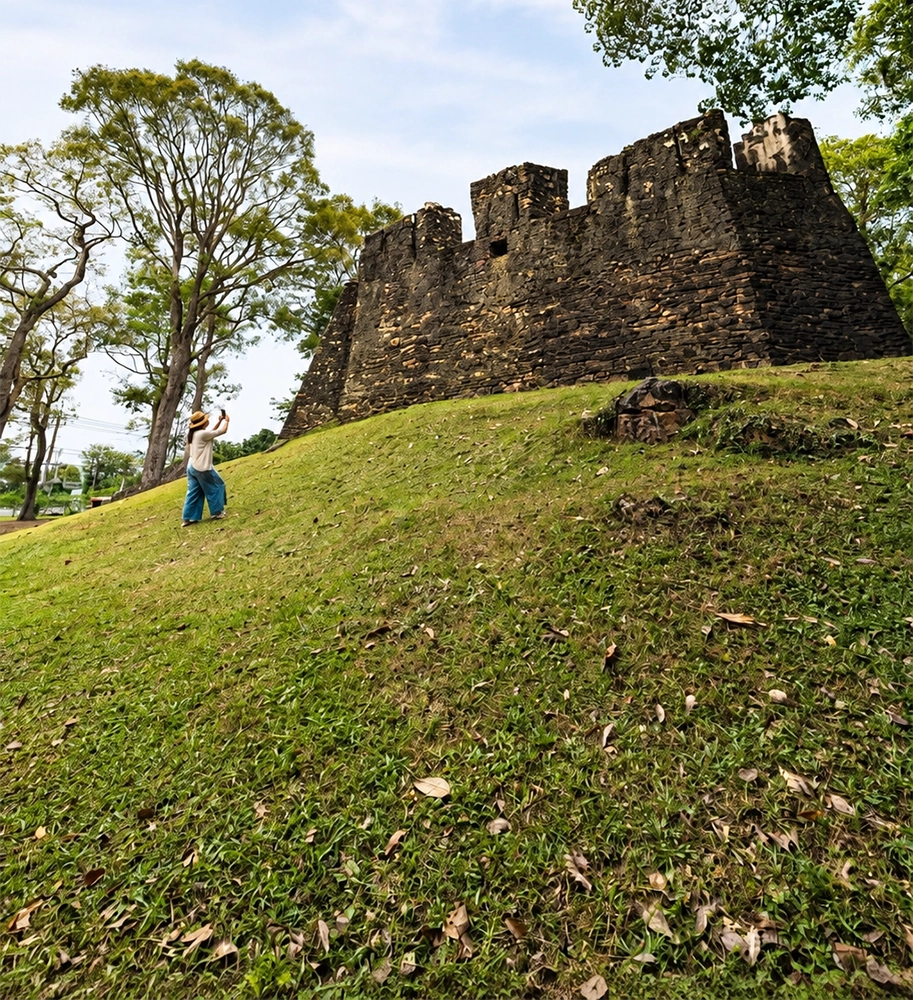
It was called Singora.
A Sultanate Above the Sea
At Hua Khao Daeng, stone fortifications still climb the green hills.
Singora emerged as an important port in the early 17th century, first under Dato Mogol and later under Sultan Sulaiman Shah. Its position was strategic: mountains protected its rear, while the lagoon offered ships a refuge from rough seas before they continued along Asian trading routes.
The city’s rulers built walls, gates, moats and forts. Fourteen of those forts survive in varying states of preservation, including Fort No. 9, known as Phraya Khaek Fort, a compact stone-and-mortar structure near the foot of Khao Noi.
Singora also understood something familiar to modern trading hubs: merchants follow incentives. The port offered tax-free trade to attract ships and compete with other regional powers.
Standing among the ruins today, it is easy to understand the attraction. The lagoon stretches toward the horizon, mountains rise immediately behind and the Gulf lies just beyond.
But geography could not save Singora.
Its growing autonomy brought it into conflict with the kingdom of Ayutthaya. After repeated confrontations, the city was defeated in the 17th century.
Songkhla’s first city fell.
The next one appeared across the water.
Starting Again at Laem Son
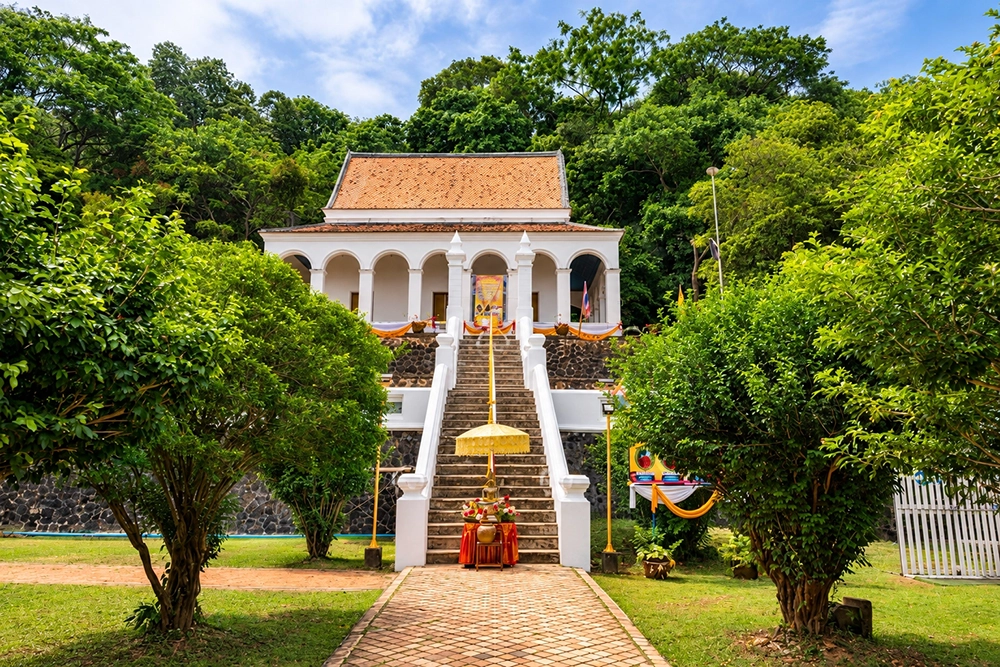
Laem Son occupies a quieter place in Songkhla’s landscape. It lacks the dramatic fortifications of Singora and the busy streets of the present-day old town, but it represents the second chapter in the city’s migrations.
Songkhla regained prominence after Thonburi became the Siamese capital in the late 18th century. Chinese settlers became increasingly influential, and Laem Son developed into a commercial port.
Among its most atmospheric remnants is Chatu Aram, a group of four Buddhist temples near the foothills: Wat Suwan Khiri, Wat Bo Sap, Wat Siri Wannawat and Wat Phupha Boek.
There is little here to suggest a once-important port city. The temples sit quietly against the hills, removed from the cafés and street art that now draw weekend visitors to Songkhla Old Town.
But those hills were part of Laem Son’s problem.
Wedged between mountain and water, the settlement had little space to grow. Fresh water was also insufficient for an expanding population.
So Songkhla prepared to move again.
In 1836, during the reign of King Rama III, the city was ordered relocated across the water to Bo Yang, where flatter land offered room for expansion.
After two centuries of displacement and reinvention, Songkhla had reached the place it occupies today.
A City That Accumulated Cultures
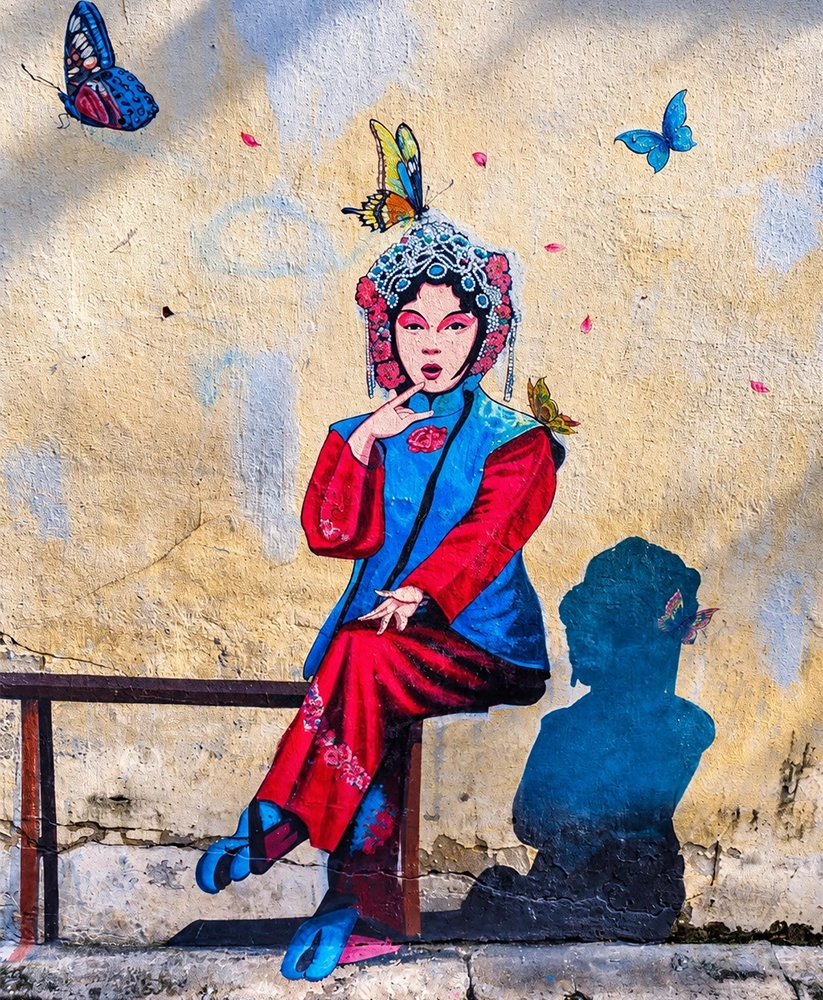
Bo Yang feels less like a preserved historic quarter than a neighborhood that happens to contain several centuries at once.
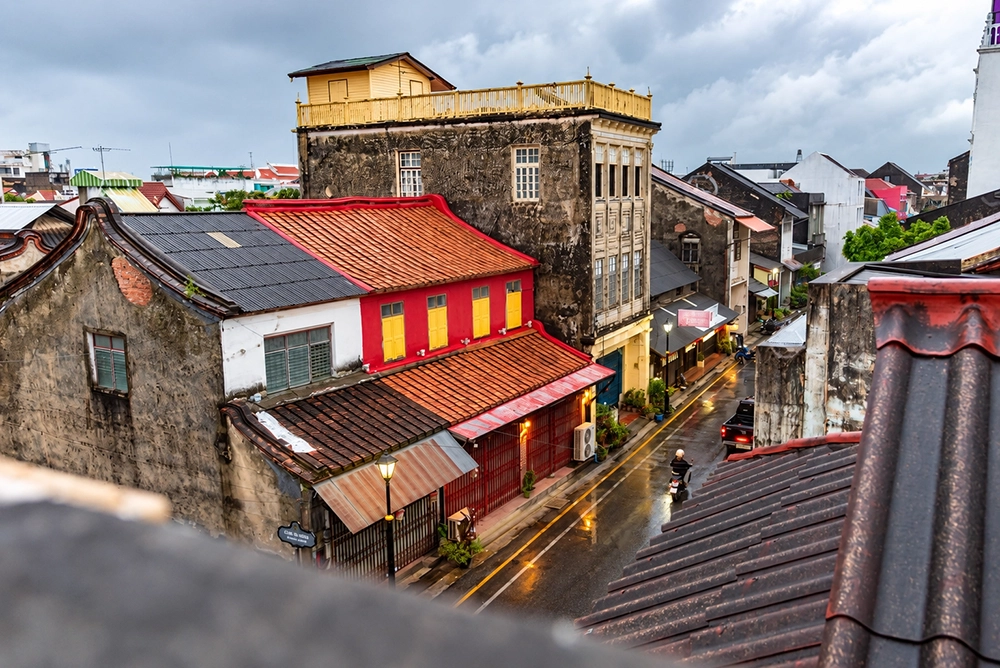
Along its streets, Chinese shophouses stand beside Sino-European buildings and later concrete structures. Buddhist temples, Chinese shrines and a mosque occupy the same compact urban fabric. Old family businesses operate near galleries, restaurants, guesthouses and coffee shops.
Wat Matchimawat Worawihan reflects the city’s Buddhist heritage. Nearby, the Songkhla City Pillar Shrine and Guan Yu Shrine speak to generations of Chinese migration and commerce. Usason Islam Mosque, commonly known as Ban Bon Mosque, recalls the Muslim communities that have long been part of Songkhla’s identity.
The architecture shifts from block to block.
Some old houses remain private residences. Others have become cafés, museums and shops. Murals appear on weathered walls, sometimes beside windows where laundry hangs or motorcycles are parked. Coffee is served behind century-old façades.
This is heritage without much ceremony.
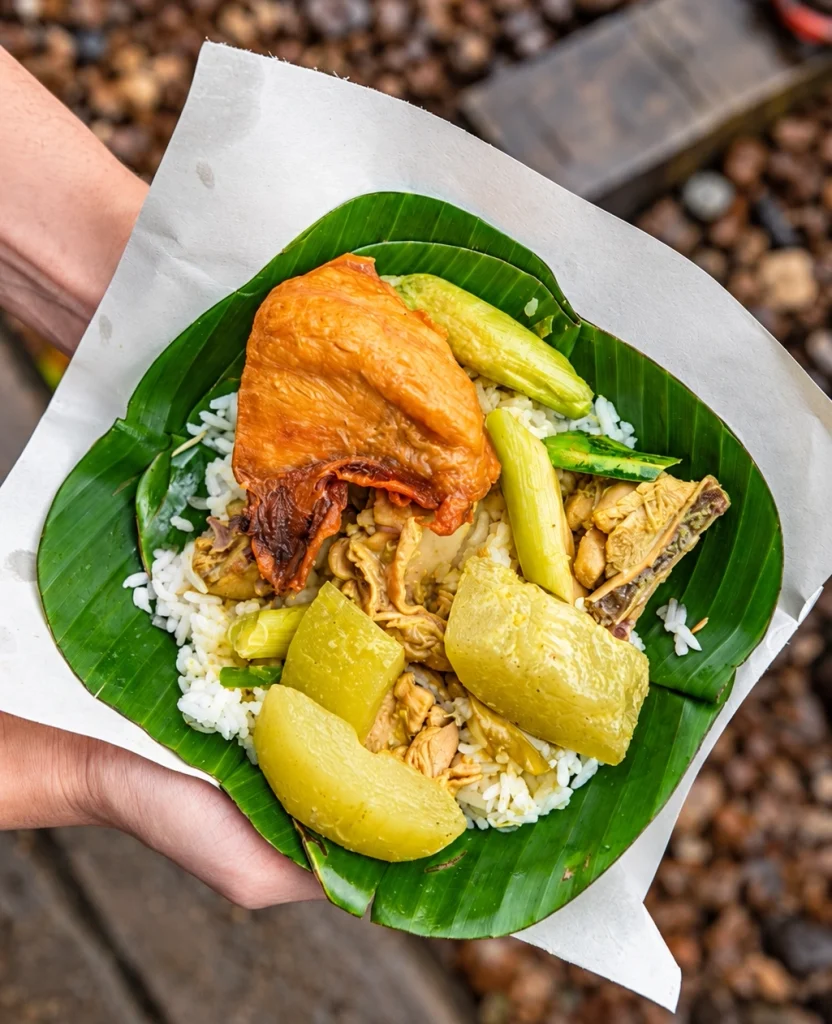
It is also edible.
Songkhla’s history survives in dishes shaped by southern Thai, Chinese and Muslim kitchens: *khao yam*, the herb-laden rice salad found across southern Thailand; *moo khong*, slow-braised pork with Hokkien roots; and *tao kua*, a local salad that brings together tofu and other ingredients in a sweet-savory dressing.
Here, history is not confined to archaeological sites. It arrives at the table.
The Long Road to UNESCO
Songkhla’s unusual history is now at the center of an effort to gain international recognition.
Thailand’s proposed “Songkhla and its Associated Lagoon Settlements” encompasses a series of communities and archaeological landscapes around the lake, including the ancient settlements of Phang Yang, Pha Kho and Si Yang; the old town of Sathing Phra; fortified Singora and Laem Son; and the present old town at Bo Yang.
The property is on Thailand’s Tentative List, a preliminary step in the long process toward possible UNESCO World Heritage designation.
Unlike destinations built around a single palace, temple or archaeological ruin, Songkhla’s argument is cumulative.
Its significance lies in the relationship between people and the lagoon over centuries: communities that engineered water systems around its shores; merchants who connected the region with the maritime networks of Asia; a Muslim sultanate that guarded its entrance; Chinese migrants who helped establish a new commercial center; and the Thai, Chinese and Muslim traditions that eventually converged at Bo Yang.
The very quality that makes Songkhla compelling, however, complicates its preservation.
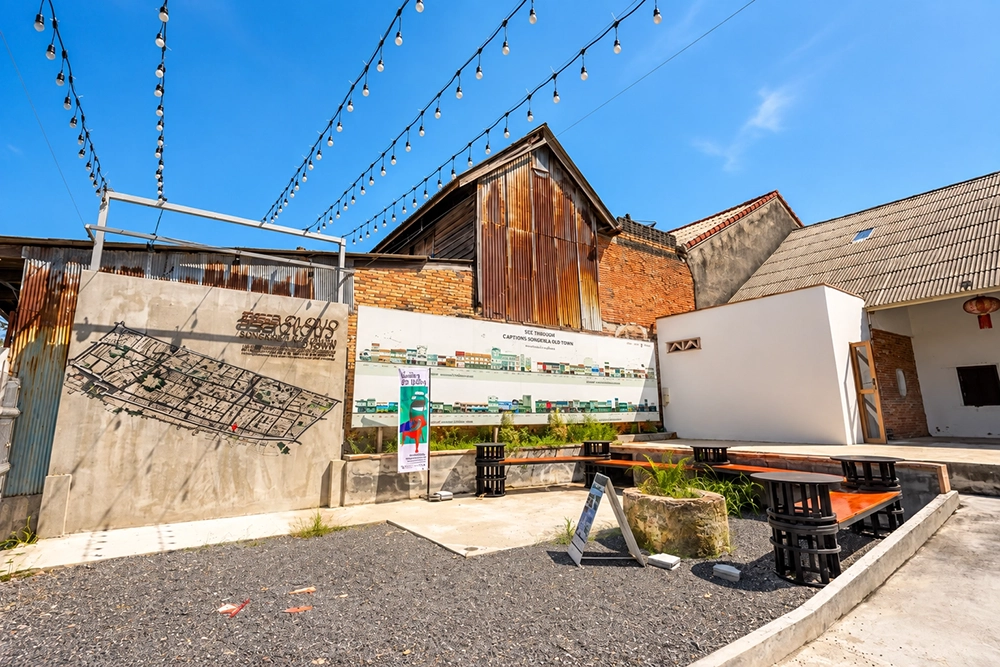
This is not an abandoned archaeological city. People live here. They build houses, open businesses, alter buildings and adapt to changing economic circumstances. Infrastructure expands. Tourism grows. Flooding remains a concern. Traditional relationships with the lagoon continue to change.
Which raises a question more difficult than whether Songkhla deserves another UNESCO label:
How do you conserve somewhere whose significance comes partly from the fact that it has never stopped changing?
Still Moving
Toward evening, Songkhla Old Town settles into an easy rhythm.
The day’s heat recedes from the pavements. Visitors photograph weathered façades and murals. Incense curls from Chinese shrines. At restaurants and street stalls, people sit down to plates of *tao kua* and *khao yam*, or bowls accompanied by rich pieces of *moo khong*.
Behind the old shophouses, families continue with routines that rarely appear in travel photographs.
And somewhere beyond the buildings lies the lagoon.
UDON THANI
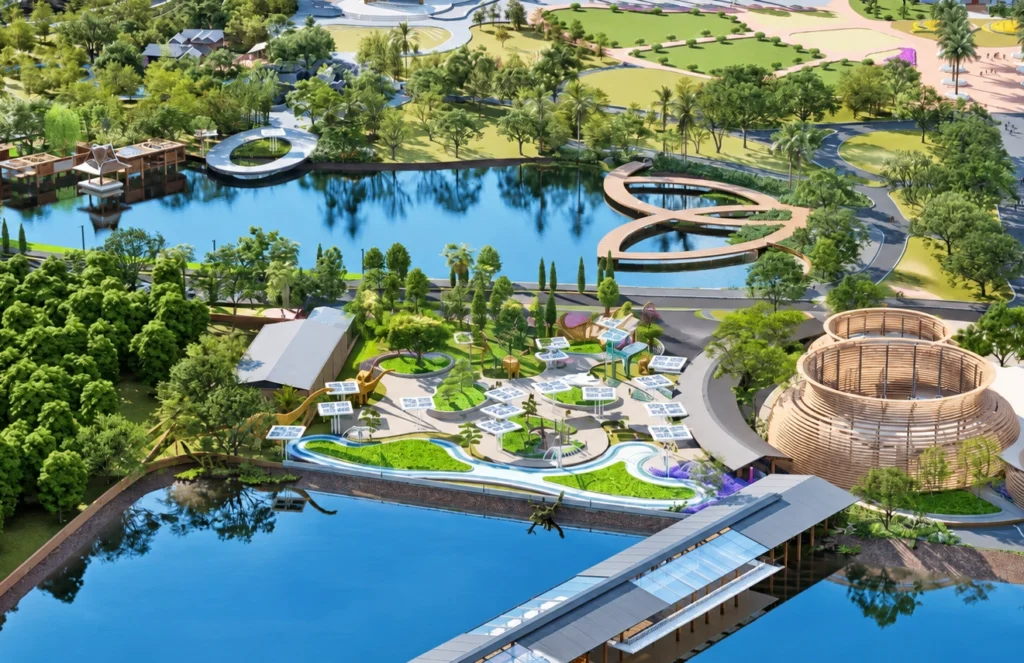
A World of Gardens Comes to Udon Thani
Udon Thani is transforming a vast wetland into a celebration of gardens, agricultural innovation and sustainable living. Running from November 1, 2026 to March 14, 2027, the International Horticultural Expo 2026 brings plants, people and ideas together for 134 days.
>> Read more
It is easy, walking these streets, to think of Songkhla as a historic town that has finally settled into place. But the ruins across the water tell another story.
For centuries, Songkhla survived by responding to whatever came next — war, trade, migration, geography, scarcity and opportunity. When one location no longer worked, the city began again somewhere else along the same body of water.
Songkhla is unlikely to move a fourth time.
Its challenge now is more complicated: figuring out how to keep moving forward without leaving its past behind.