

An angel is shouting at visitors inside the National Museum Bangkok. Dressed in a traditional Thai headdress, with distinctly Western facial features, the celestial figure looks anything but serene. Is it angry? Has someone done something wrong? Or is it simply trying to get our attention?
Thai sculptor Wayupat Rattanaphet calls his creation The Bellow. He isn’t interested in making angels look sacred or perfect. His celestial beings have human emotions, and this one seems to have plenty to get off its chest.
Running from 29 October 2026 to 28 February 2027, the fifth Bangkok Art Biennale brings works by 72 artists from 29 nationalities to 11 venues across the capital.
The theme is Angels & Mara, a reference to Bangkok’s nickname, the City of Angels, and Mara, who tried to tempt the Buddha away from enlightenment. Not all the angels here are particularly angelic. Some, like Wayupat’s shouting figure, behave rather like ordinary humans.
For travellers, the biennale offers a chance to explore Bangkok through its art, from the old city’s temples and museums to the riverside communities of Thon Buri and the shopping districts of modern Bangkok.

Morning: Art and heritage in Rattanakosin
Start at Museum Siam, a handsome neoclassical building near MRT Sanam Chai station. The former Ministry of Commerce building now houses a museum exploring what it means to be Thai, offering an engaging start to the day’s art trail.
A short walk brings you to Wat Pho, home to the enormous Reclining Buddha and courtyards filled with colourful stupas. Among the biennale’s installations is Memento Mori by Japanese-Swiss artist Leiko Ikemura, whose work reflects on mortality and the human condition.
It’s an unusual place to encounter contemporary sculpture, although the subject is hardly out of place. At Wat Pho, Buddhist art and teachings have long reflected the belief that nothing in life lasts forever.
Beyond the temple, Rattanakosin’s historic streets are worth exploring at an unhurried pace. For a change from walking, rent a bicycle through Anywheel or Hello Ride, two app-based sharing services. Cycling allows you to stop at old shophouses, small cafés and landmarks along the way.
Head north past the Grand Palace to Silpakorn University, one of Thailand’s leading art institutions. Its Art Centre is another biennale venue, bringing contemporary works into a place closely associated with modern Thai art.
A little farther along, the National Museum Bangkok occupies former royal palace buildings, with collections ranging from Buddhist sculpture to royal regalia.
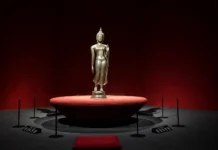
Inside the Issara Winitchai Throne Hall, you’ll encounter Wayupat’s The Bellow, the shouting angel introduced earlier.
The artist says his celestial beings are not meant to be worshipped. Just like us, these angels are imperfect and emotional. They can be lazy and angry. They can love and be loved. He wants viewers to decide for themselves whether the shouting angel has come to punish them or offer a blessing.

Early afternoon: Across the river to Thon Buri
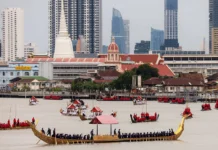
From the National Museum, walk to Tha Prachan Pier and catch a cross-river ferry to Wang Lang. The fare is around 5.50 baht, and the short journey offers a glimpse of Bangkok’s working river, with commuter boats moving between the banks.
Wang Lang is a good place to stop for lunch. Its busy market is packed with street food stalls, local eateries and shops selling everything from clothing to everyday household goods.
From here, take a taxi or tuk-tuk to Wat Arun, around five minutes away in light traffic.
Known as the Temple of Dawn, Wat Arun rises above the river with its towering central prang covered in intricate porcelain mosaics. It is one of Bangkok’s most photographed landmarks, but the biennale gives visitors another reason to explore its grounds.
Continue south to Wat Prayoon, near Memorial Bridge, where a great white chedi rises above the temple buildings.

DRINK
A Taste of Old Hong Kong After Dark
There is something about old Hong Kong that still captures the imagination: neon-lit streets, bustling restaurants, smoky bars and nights that seem to stretch well beyond midnight. A little of that atmosphere has found its way to Bangkok, where The China House at Mandarin Oriental is giving diners a reason to stay out late.
>> Read more
Beside the temple’s Khao Mo, an artificial rocky hill surrounded by a pond, another of Wayupat’s angels appears to have fallen straight out of heaven.
Unlike the shouting figure at the National Museum, this celestial being seems to be tumbling towards the water. The artist describes it as a fallen angel, leaving visitors to imagine what might have brought it down to earth.
Neither sculpture resembles the flawless divine beings familiar from traditional religious imagery. Wayupat prefers angels with human characteristics, creatures that might inhabit a parallel world alongside our own.
Late afternoon: Contemporary Bangkok
By late afternoon, make your way to MRT Itsaraphap station for the Blue Line back towards central Bangkok.

Get off at Lumphini and head to One Bangkok, a large development combining contemporary architecture, public art, restaurants and shopping.
The biennale’s presence here feels quite different from the morning’s temple settings. Instead of gilded stupas and old palace buildings, artworks occupy a modern landscape of glass towers, landscaped spaces and fashionable boutiques.
Continue to the Bangkok Art and Culture Centre (BACC), near BTS National Stadium station, where works by 37 participating artists fill the galleries.
Among them is Vestibule by Thai textile artist Ploenchan Vinyaratn, an immersive installation that invites visitors into a narrow passage enclosed by thick layers of woven and crocheted textiles. Deep reds, oranges and tangled threads surround the walkway, creating an almost cave-like atmosphere.
ARTS & CULTURE
Bangkok’s Hidden Temple
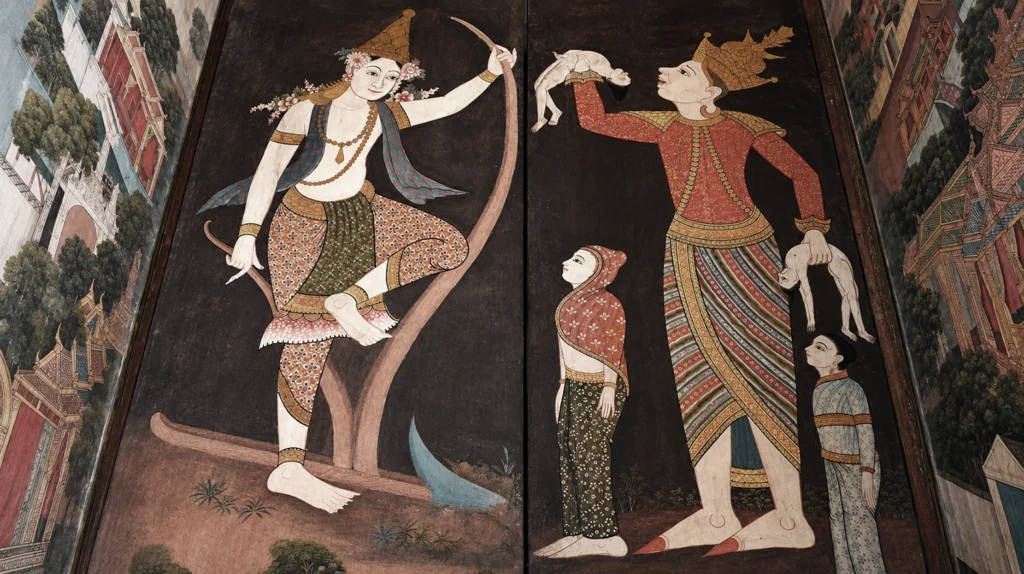
Hidden within Bangkok’s former Front Palace, Wat Bowon Sathan Sutthawat opens its doors to visitors until 20 September. This rarely accessible royal temple reveals extraordinary murals depicting Buddhas, Hindu gods and celestial beings, offering a glimpse into Thailand’s rich artistic heritage and centuries of religious and cultural exchange.
>> Read more
Look closely and you’ll find surplus yarn, fabric scraps and broken pickleballs among the materials. Ploenchan transforms these discarded objects into an artwork that invites visitors to consider change. Entering the passage one at a time, they are left to wonder whether someone might go in as devil (Mara) and emerge as an angel, or perhaps the other way around.
From BACC, the Siam shopping district is an easy walk away. Siam Paragon and centralwOrld are also biennale venues, bringing contemporary art into spaces better known for fashion, food and entertainment.
It’s a good place to end the day. Browse the installations, stop for dinner or simply enjoy the evening crowds.
By now, the temples of Rattanakosin may seem a long way behind. Yet another artwork is waiting among the shops and restaurants. Bangkok Art Biennale has a way of keeping you looking, even when you think you’ve finished sightseeing.
If you go
Dates: Bangkok Art Biennale 2026 runs from 29 October 2026 to 28 February 2027. Admission to biennale exhibitions is generally free, although temple and museum entrance fees may apply.
Getting around: Start at MRT Sanam Chai. Use Anywheel or Hello Ride bicycles to explore Rattanakosin, checking availability and parking points in the apps. From Tha Prachan Pier, take the ferry to Wang Lang, then a taxi or tuk-tuk to Wat Arun and Wat Prayoon. Continue by local transport to MRT Itsaraphap, taking the Blue Line to Lumphini for One Bangkok. BACC is near BTS National Stadium.
Time needed: Allow a full day, or split the route over two days for a more relaxed visit.
More information: www.bkkartbiennale.com