

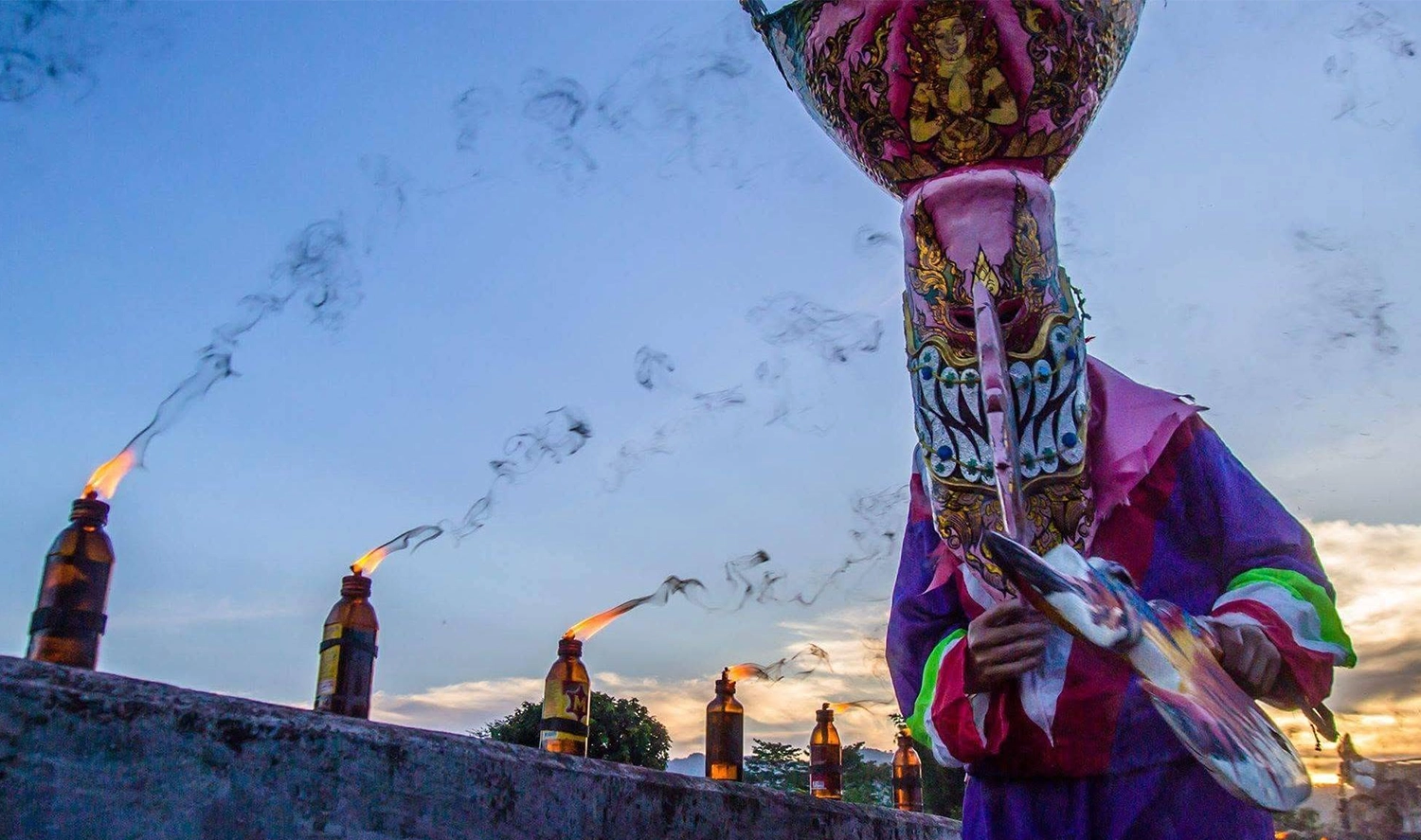
Each June, the quiet mountain town of Dan Sai, in northeastern Loei Province, erupts into a surreal spectacle of painted masks, jangling bells and ecstatic street processions. Men dressed as spirits dance through the town wearing towering handmade masks with elongated noses and wild, grinning faces — equal parts mischievous, theatrical and unsettling.
This is Phi Ta Khon, one of Thailand’s most unusual festivals, where Buddhist ritual, animist belief and folk performance converge in a celebration unlike any other in the country.
The 2026 edition of the annual Bun Luang and Phi Ta Khon Festival will take place from June 20 to 22 around the Dan Sai District Office and Wat Phon Chai, the spiritual center of the festivities. For three days, the town becomes a stage for ritual processions, communal ceremonies and exuberant performances that draw visitors from across Thailand and beyond.
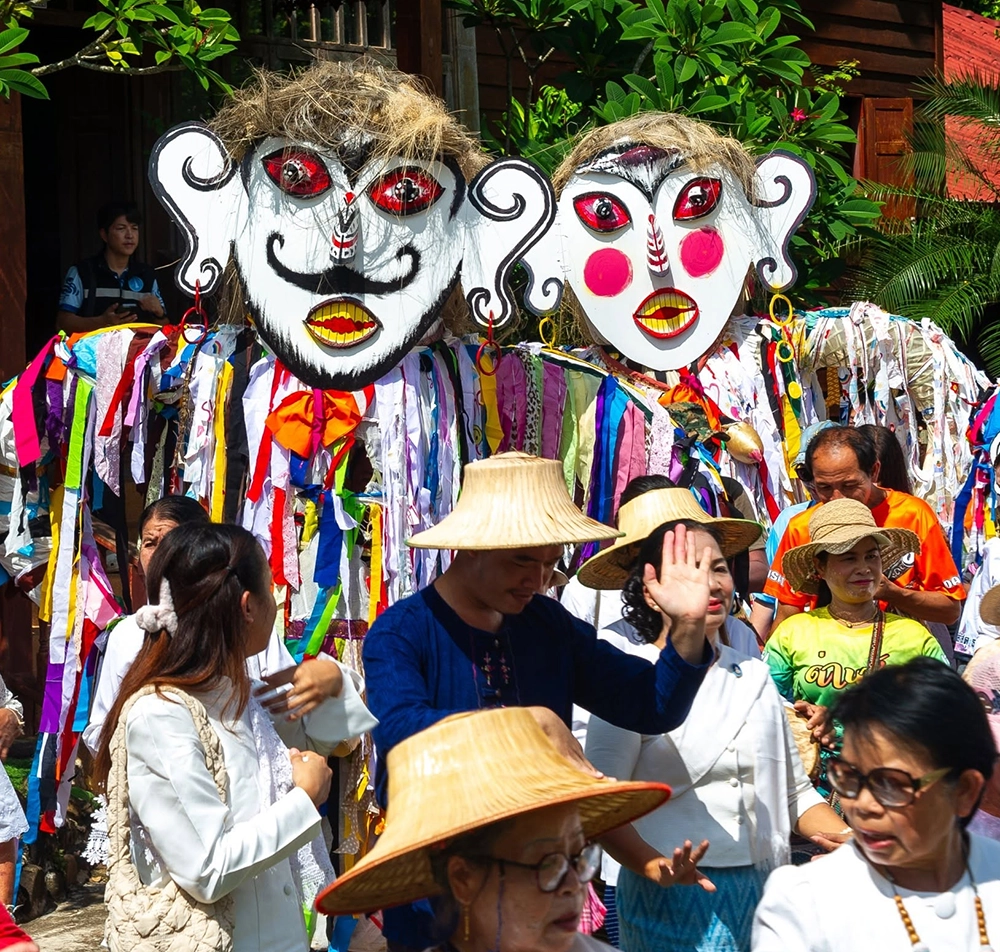
Often referred to as Thailand’s “ghost festival,” Phi Ta Khon traces its origins to local interpretations of the Vessantara Jataka, one of Buddhism’s most revered stories. According to legend, when Prince Vessantara returned home after exile, the celebration was so joyous that even spirits from the forest emerged to join the procession.
That tale lives on in the festival’s most iconic feature: the masks.
Traditionally, they are assembled from materials found in rural households. The head is fashioned from a bamboo sticky-rice steamer, the face from carved coconut husk, and the nose from soft wood. Though once relatively simple, today’s masks have evolved into striking expressions of folk art, hand-painted in vivid colours and increasingly imaginative designs.
Yet Phi Ta Khon is not merely a photogenic spectacle for social media. Beneath the carnival-like atmosphere lies a deeper expression of communal memory and faith. The festival remains closely tied to merit-making ceremonies and religious observances, reflecting a worldview in which the spiritual and everyday coexist with little contradiction.
For travellers seeking a different side of Thailand — one far removed from beach resorts and Bangkok’s urban intensity — Dan Sai offers something rarer: a living tradition that has resisted becoming mere performance.
In Phi Ta Khon, the ghosts still dance, but they do so in service of something enduring — remembrance, reverence and the preservation of local identity in a rapidly changing world.
Travel Information
Travelers can reach Loei Province from Bangkok by air, bus or car. The fastest option is a direct flight to Loei Airport (about 1 hour), followed by a 1.5–2 hour drive to Dan Sai. Buses take 8–10 hours, while driving takes around 7–9 hours, offering more flexibility for regional exploration.









[…] >> Read more […]
Comments are closed.