
In Chiang Mai, the most memorable lights during Yi Peng don’t necessarily float into the sky. Some burn quietly in small clay bowls, arranged along temple walls, around ancient pagodas and beside Buddhist shrines.
For travellers who associate the northern Thai city with photographs of thousands of glowing lanterns rising into the night, the celebrations in the Old City offer a different experience. Here, the festival unfolds at ground level, among historic temples and streets that still follow the outline of the former Lanna capital.
On November 23, Ratchadamnoen Road will become the setting for a candlelit procession known as Tam Phang Prathip Song Fa Haksa Mueang, a ceremony whose name roughly translates as lighting sacred lamps to illuminate and protect the city.
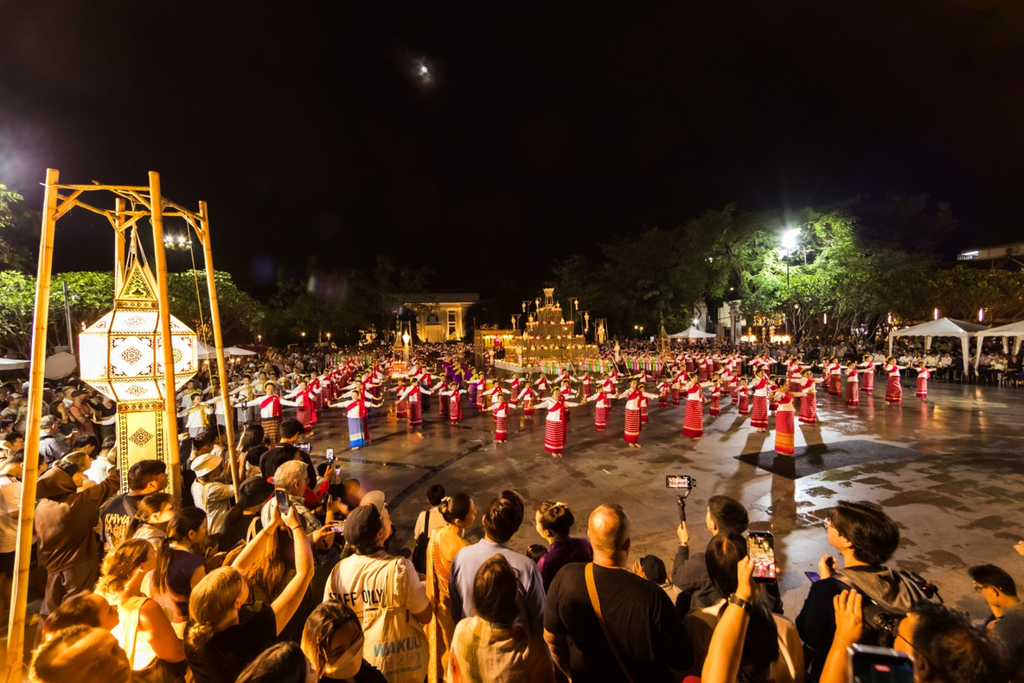
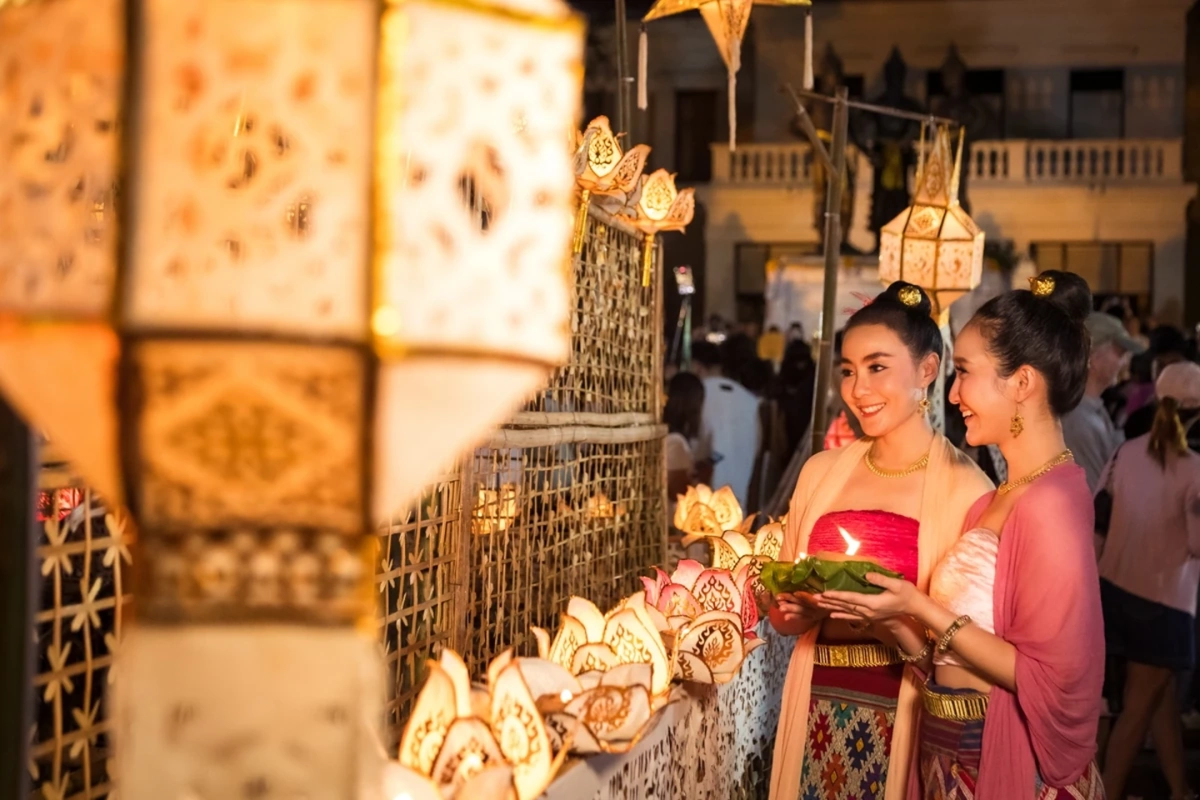
Chiang Mai’s historic Old City comes alive with traditional Lanna festivities as locals celebrate the spirit of Yi Peng. Photo: TAT
Beginning at 5:30 p.m. near Tha Phae Gate, the procession will make its way towards Wat Chedi Luang, one of Chiang Mai’s most important Buddhist temples. Participants will carry small earthenware lamps through the historic centre, while hundreds of dancers gather for a candlelit performance around the temple’s great brick pagoda.
Now in its 15th year, the ceremony brings together Buddhist devotion, traditional Lanna dance and a custom that has survived for generations.
A different kind of light
Yi Peng coincides with Loy Krathong, Thailand’s annual festival of floating offerings, but its traditions are closely associated with the former Lanna kingdom, which ruled much of northern Thailand for centuries.
During the festival, colourful paper lanterns hang outside temples and above narrow streets. Yet some of the most meaningful decorations are considerably smaller.
Known as phang prathip, these simple earthenware lamps contain oil and cotton wicks. They are placed along temple walkways, around shrines and at the bases of pagodas, where their flames flicker in the evening breeze.
For Buddhists, lighting a lamp is an act of merit-making. The flame represents wisdom overcoming ignorance, while the offering expresses respect for the Buddha and his teachings.
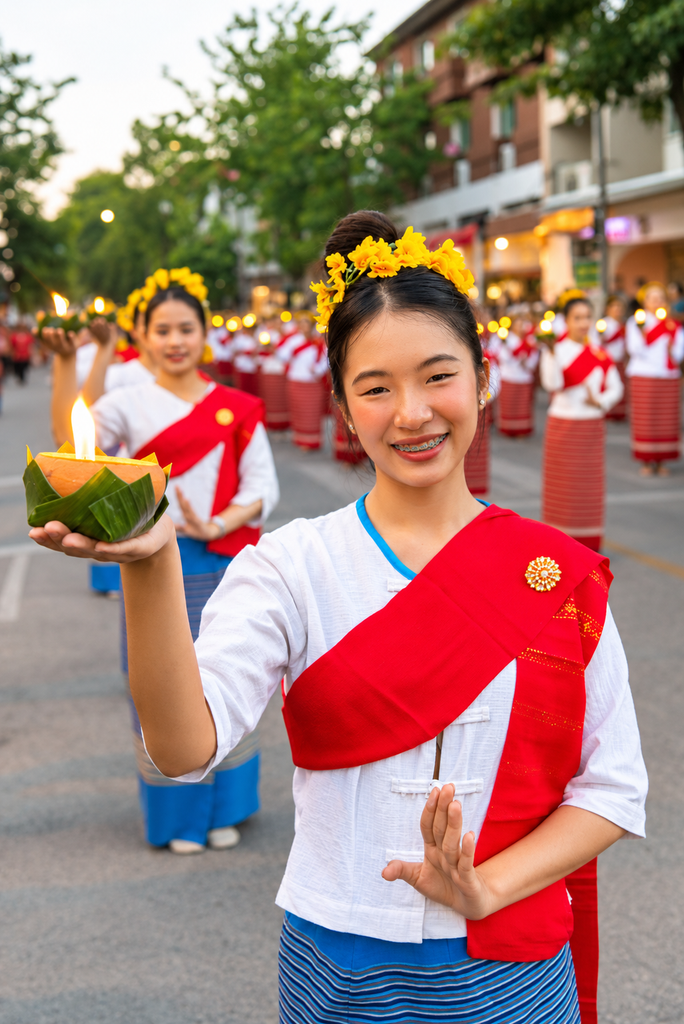
Local people perform traditional Lanna dances in Chiang Mai’s historic Old City as part of the Yi Peng celebrations. Photo: TAT
There is also a story behind the lamps’ distinctive wicks.
According to a Lanna Buddhist legend, a white crow lost her five eggs when a storm carried them into a river. Each egg was rescued by a different animal, and the five children eventually became five Buddhas. When they sought their birth mother, she appeared as a celestial being and asked them to light lamps with cotton wicks shaped like a crow’s foot in remembrance of her.
The wick, known locally as teen ka, remains part of the tradition.
For many families, lighting phang prathip is also an expression of gratitude towards parents, caregivers and others who have played important roles in their lives.
It is a more personal side of Yi Peng, one that can easily be overlooked amid the international fascination with mass sky-lantern releases.
A city remembers its beginnings
This year’s ceremony carries additional significance. Chiang Mai celebrates the 730th anniversary of its founding by King Mangrai in 1296, when the city became the capital of the Lanna kingdom.
Although sections of the original defensive walls have disappeared or been reconstructed, the moat, gates and surviving fortifications still mark the boundaries of the historic centre.

The ancient stupa of Wat Chedi Luang glows amid festive lights and flickering earthenware lamps during Chiang Mai’s Yi Peng and Loy Krathong celebrations. Photo: TAT
The evening’s main gathering will take place at Wat Chedi Luang.
The temple’s enormous brick chedi, built during the Lanna period and partly destroyed by an earthquake in the 16th century, rises above the surrounding buildings. Even in its damaged state, it remains one of Chiang Mai’s most recognisable monuments.
Here, 730 dancers will perform fon tian, a traditional northern Thai candle dance. Holding lit candles, they will move together in measured steps, turning their wrists and extending their arms in the graceful gestures characteristic of Lanna performance.
The number of dancers is a tribute to the city’s 730-year history.
For visitors, the performance offers an opportunity to see how religious devotion, local identity and traditional arts remain closely connected in Chiang Mai.
Exploring the Old City after dark
As the procession moves along Ratchadamnoen Road, lamps will also be lit at the Old City’s four historic corners — Sri Phum, Hua Lin, Ku Hueang and Katam — as part of a ritual associated with protecting the city and its inhabitants.
One of the pleasures of Yi Peng in the Old City is that much of the celebration can be experienced on foot.
Visitors can begin near Tha Phae Gate, follow the procession along Ratchadamnoen Road and continue towards Wat Chedi Luang, stopping to observe the lamps and decorations along the way.
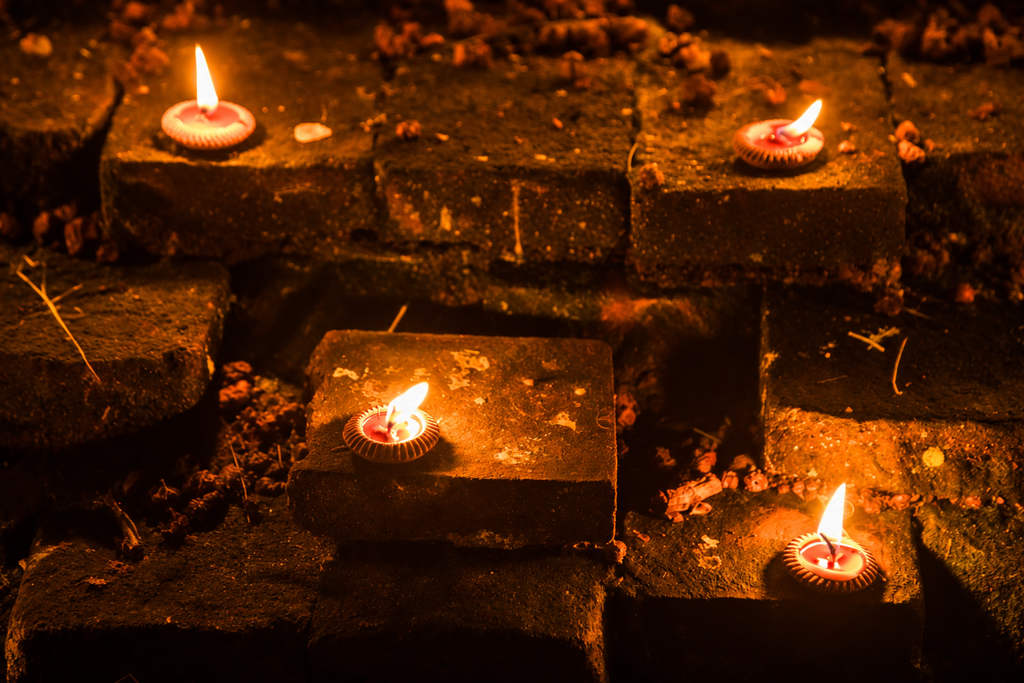
Small earthenware lamps illuminate temple courtyards during Chiang Mai’s Yi Peng festival. Photo: TAT
A short walk away, Wat Phan Tao is worth visiting for its traditional wooden assembly hall and intimate temple setting. During Yi Peng, the surrounding religious precincts offer another perspective on the city’s enduring Buddhist customs.
The restrictions on sky-lantern releases within the Old City may disappoint those expecting the famous spectacle seen in promotional photographs. But the absence of airborne lanterns allows other traditions to take centre stage.
Instead of looking upwards, visitors can watch families making offerings, dancers carrying candles and temple courtyards gradually filling with light.
For a city celebrating more than seven centuries of history, Yi Peng is not simply a festival of illumination. It is also a reminder of the beliefs and customs that have helped Chiang Mai retain its distinctive Lanna identity.
And sometimes, the smallest flame tells the most interesting story.